.svg)

The Owner’s Crucible: 5 Data Strategies to Secure Your Tooling Shop’s Future in 2025

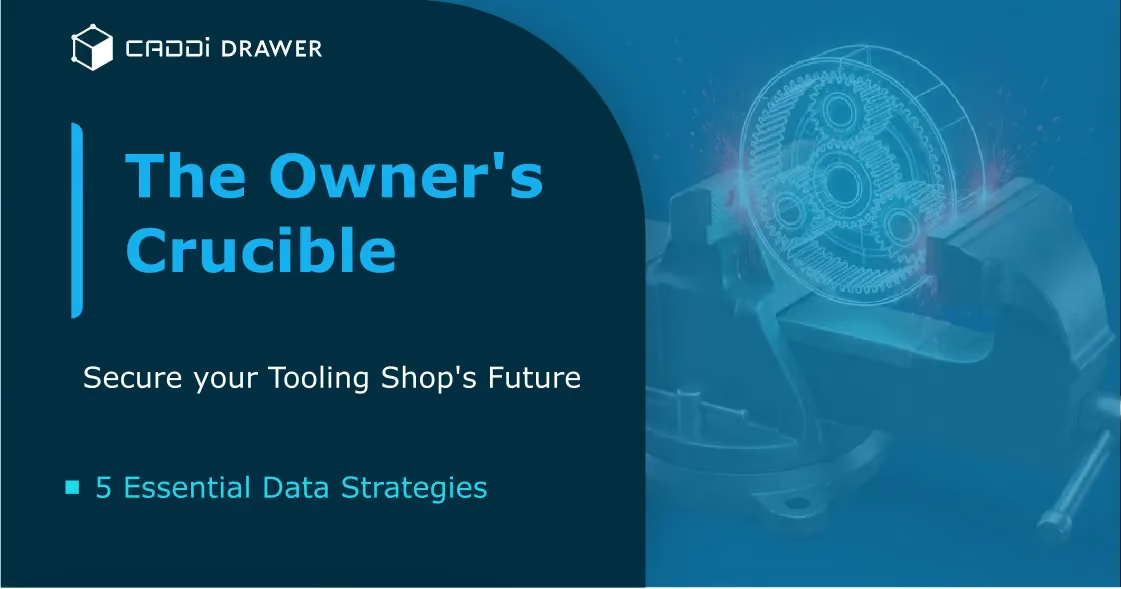
Table of Contents

For the C-suite of an American tooling company, the current landscape is a study in contradiction. While reshoring initiatives and a burgeoning defense sector are driving record top-line revenue, many owners find themselves in a "more revenue, less profit" squeeze. The traditional role of the "craftsman-owner" is being forcibly evolved into that of a "technologist-financier," where success is no longer about just making the part, but managing a volatile ecosystem of rising labor costs, regulatory barriers, and supply chain fragility. To move your organization from passive survival to strategic reinvention, you must bridge the divide between your legacy assets and modern Manufacturing Intelligence.
Here are five critical challenges facing American tooling owners today and how CADDi helps turn these pressures into a competitive moat.

Breaking the Stranglehold of Tribal Knowledge
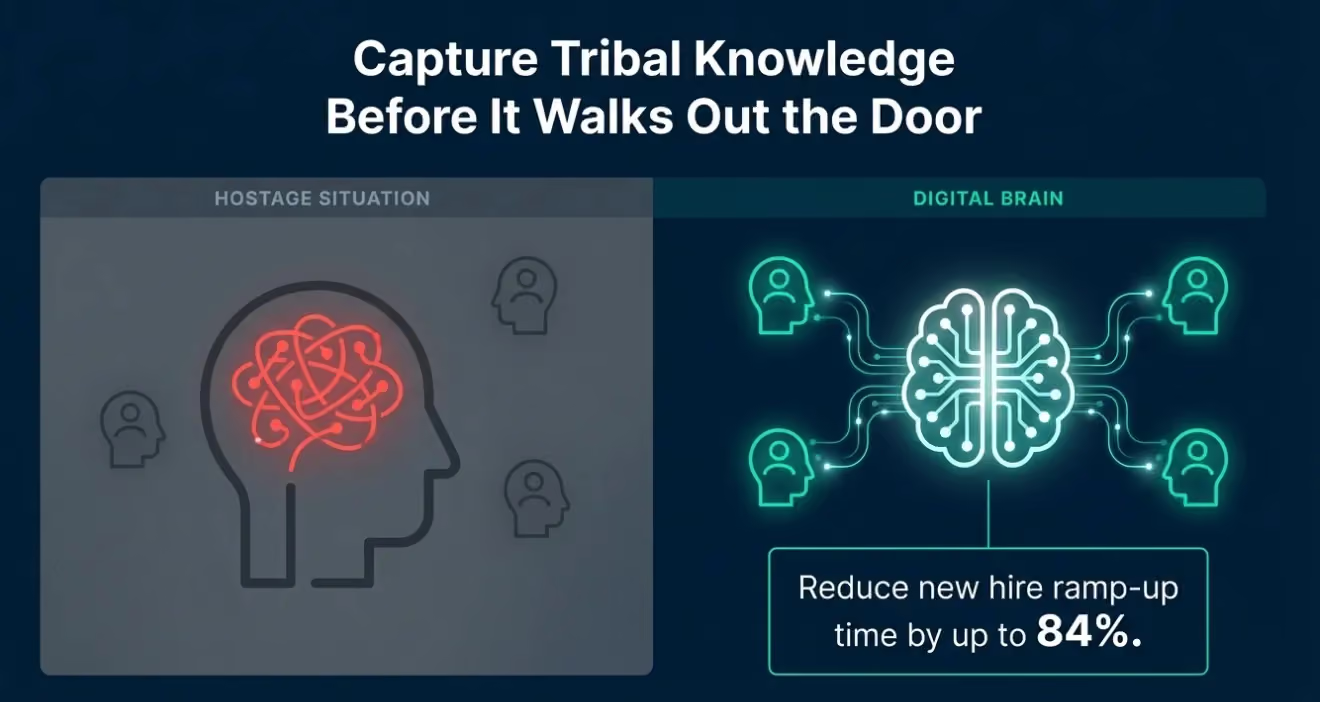
The Challenge: Most tooling shops operate in a "hostage situation" where the keys to the most complex setups live exclusively in the minds of a few senior machinists. This "tribal knowledge" creates an immense "bus factor" risk: if a key employee retires or leaves, the business is paralyzed.
Why It Matters Now: The industry is hitting a demographic cliff known as the "Silver Tsunami," with a projected shortfall of 1.9 million workers by 2033. When veteran engineers retire, their undocumented insights into design and production go with them, leading to longer onboarding times and increased error rates for the next generation.
How CADDi Helps: CADDi Drawer acts as your organization’s "digital brain," capturing and digitizing decades of fragmented intellectual property (IP), including handwritten notes on legacy 2D drawings. By centralizing this data, the platform allows any team member to access past projects and understand design intent instantly, reducing the time for new hires to become productive by up to 84%. Learn more about this in our report: The Labor Paradox: Navigating Manufacturing's Unsettling Reality.
Eliminating the Quoting Bottleneck
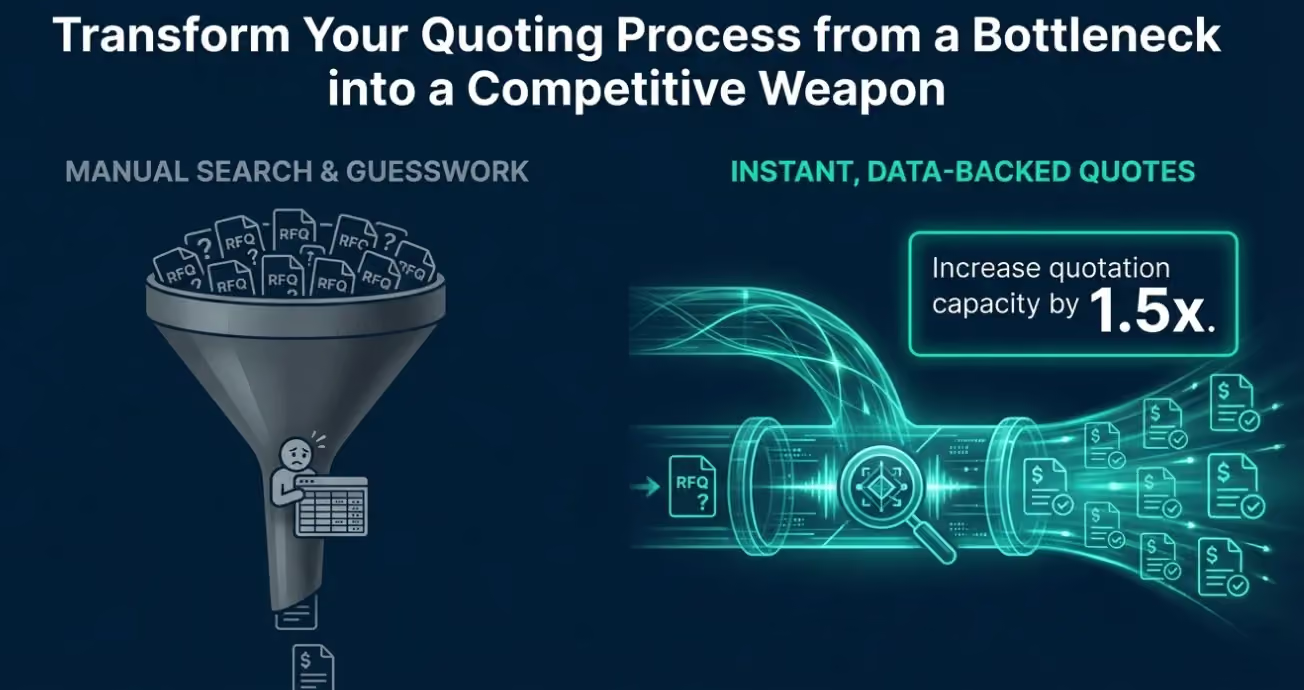
The Challenge: Quoting is frequently a massive administrative time-sink that halts an owner's ability to work on the business. Speed-to-quote is a critical competitive metric, yet many shops rely on legacy spreadsheets and manual searches that can take hours or days to produce a single estimate.
Why It Matters Now: In a market defined by the "Amazon Effect," customers expect instant gratification and technical superiority. The first responder to an RFQ often secures the business, but move too fast without accurate data and you risk winning a "race to the bottom" with an unprofitable deal.
How CADDi Helps: Using patented similarity search, CADDi Quote allows your team to upload a new RFQ drawing and instantly find every geometrically similar part your company has ever handled. By automatically linking past pricing and actual ultimate costs to these drawings, your sales team can increase quotation capacity by 1.5x and deliver estimates that are both rapid and data-backed. Explore this further in our guide: Manufacturing Quotation in 2025 - Challenges and Opportunities.
Closing the Digital Gap in Job Costing
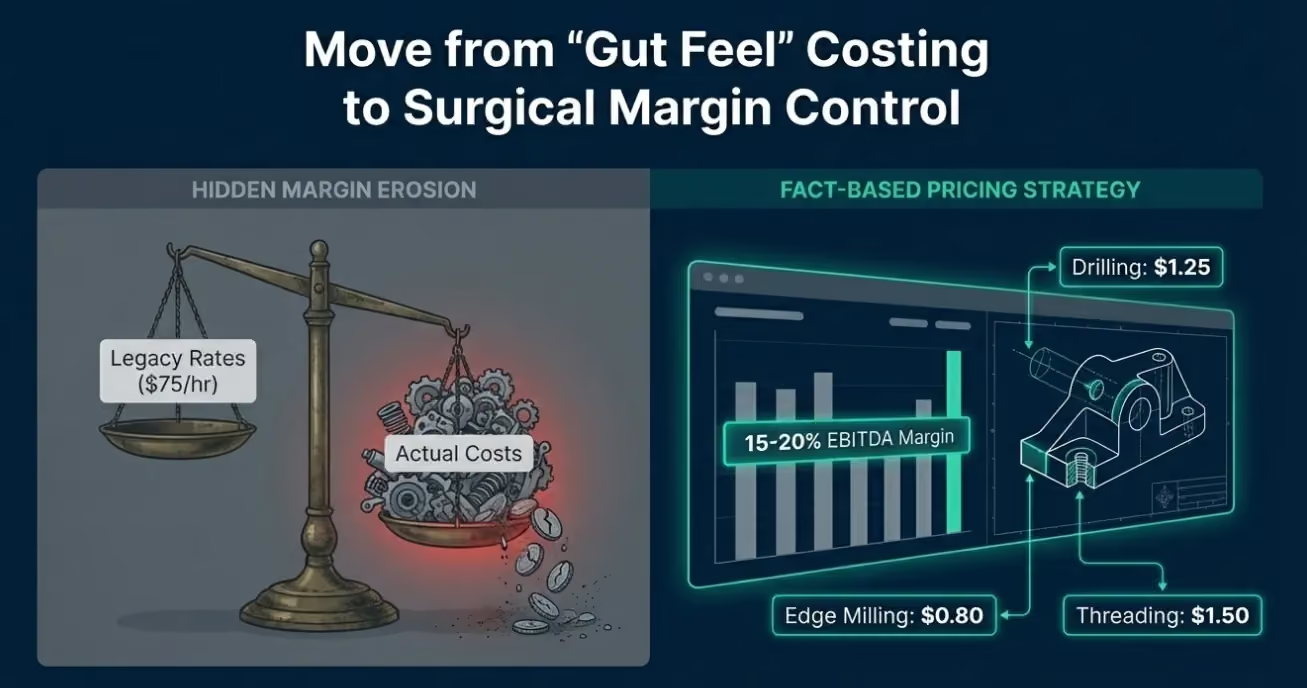
The Challenge: A stark divide exists between shops utilizing data-driven costing and those operating on "gut feel" legacy rates (e.g., a flat $75/hour) that haven't kept pace with labor inflation. This inaccuracy leads to margin erosion and the danger of winning work that effectively loses the company money.
Why It Matters Now: The market for skilled labor has reset, with top-tier machinists commanding significantly higher wages than just three years ago. To maintain an EBITDA margin of 15-20%, owners need precise instrumentation to identify exactly which jobs are profitable and which should be "fired".
How CADDi Helps: CADDi functions as a System of Insight (SoI), integrating data from your ERP, PLM, and drawings to provide a unified view of your margins. By linking design features to associated financial and quality data, owners can understand price patterns between specific geometries and actual production costs, allowing for logical, fact-based pricing strategies.
Turning the Regulatory Moat into an Asset
The Challenge: Stringent regulations like CMMC 2.0 and ITAR have moved from administrative headaches to existential filters. Shops that cannot invest the $100,000+ required to secure their digital perimeter risk being exiled from high-margin defense work.
Why It Matters Now: Cybersecurity is no longer just an IT issue; it is a strategic moat. As prime contractors tighten their supply chains, they are aggressively seeking compliant partners who can demonstrate "reasonable care" in protecting sensitive technical data.
How CADDi Helps: CADDi provides a secure, centralized repository for your most sensitive technical IP. By consolidating drawings from vulnerable local hard drives and email inboxes into a single, access-controlled platform, you reduce your attack surface and satisfy the rigorous documentation requirements of a SOC 2 compliant environment.

Decoupling Revenue from Headcount
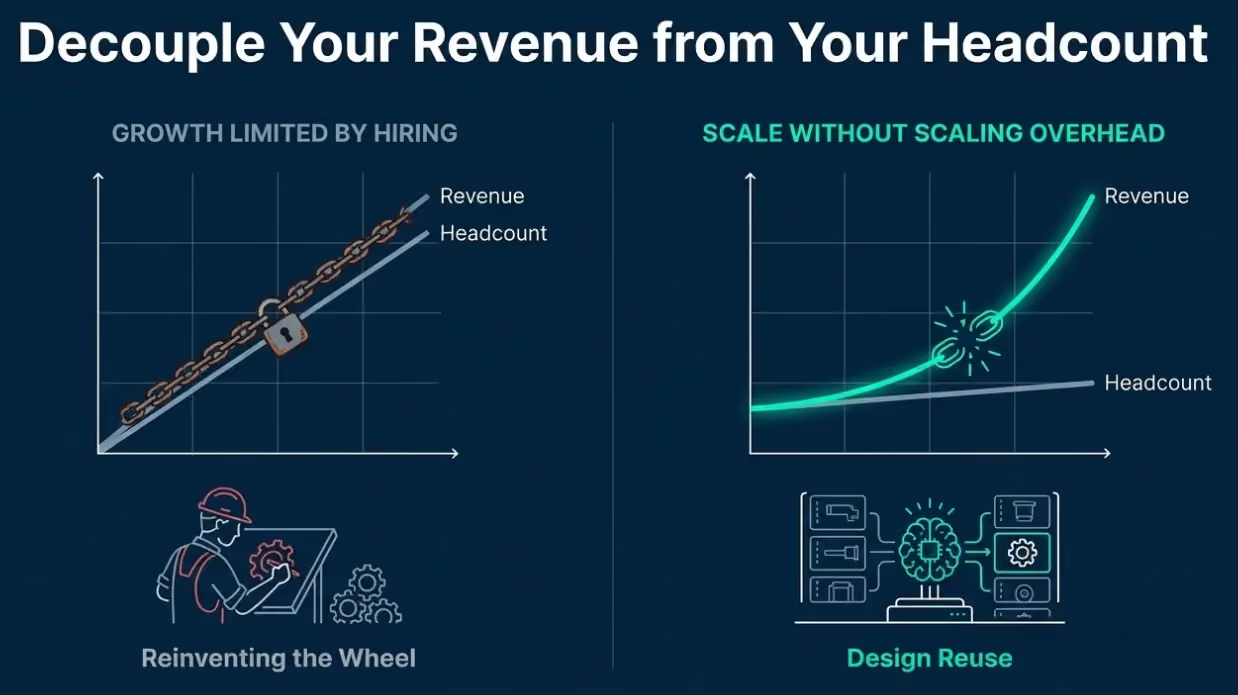
The Challenge: Tooling leadership is often trapped in a cycle where growth is limited by the number of skilled bodies they can put on the floor. Every time an engineer "reinvents the wheel" because they can't find an existing part, it costs the company thousands in inventory carrying costs and unnecessary tooling.
Why It Matters Now: With a zero-sum labor market, every hour of recovered efficiency is equivalent to increasing your headcount capacity. Shops must automate "knowledge work" to free their high-paid talent for innovation rather than administrative drudgery.
How CADDi Helps: CADDi’s similarity search directly attacks parts proliferation, reducing drawing search time by 90% and preventing the creation of redundant parts. By enabling design reuse, companies like Dairy Conveyor Corp. have seen a 22% reduction in fabricated part spend, allowing them to scale revenue without adding expensive engineering overhead. See this in action with our CADDi Drawer Product Tour.
Reinventing the Tooling Business Model
The American tooling leader of 2025 cannot afford to rely on paper travelers and grease boards. The path forward requires replacing guesswork with data and rigid legacy plans with agile, drawing-centric intelligence. By transforming your dormant drawing archive into a strategic asset, you can secure your margins, bridge the skills gap, and position your shop as a high-value partner in the new industrial era.
Ready to see how a drawing-centric AI platform can modernize your operations?
Book a personalized demo today or download our comprehensive guide: Reduce costs, not quality: Use VA/VE to uncover opportunities for efficiency.
For the C-suite of an American tooling company, the current landscape is a study in contradiction. While reshoring initiatives and a burgeoning defense sector are driving record top-line revenue, many owners find themselves in a "more revenue, less profit" squeeze. The traditional role of the "craftsman-owner" is being forcibly evolved into that of a "technologist-financier," where success is no longer about just making the part, but managing a volatile ecosystem of rising labor costs, regulatory barriers, and supply chain fragility. To move your organization from passive survival to strategic reinvention, you must bridge the divide between your legacy assets and modern Manufacturing Intelligence.
Here are five critical challenges facing American tooling owners today and how CADDi helps turn these pressures into a competitive moat.
Breaking the Stranglehold of Tribal Knowledge
The Challenge: Most tooling shops operate in a "hostage situation" where the keys to the most complex setups live exclusively in the minds of a few senior machinists. This "tribal knowledge" creates an immense "bus factor" risk: if a key employee retires or leaves, the business is paralyzed.
Why It Matters Now: The industry is hitting a demographic cliff known as the "Silver Tsunami," with a projected shortfall of 1.9 million workers by 2033. When veteran engineers retire, their undocumented insights into design and production go with them, leading to longer onboarding times and increased error rates for the next generation.
How CADDi Helps: CADDi Drawer acts as your organization’s "digital brain," capturing and digitizing decades of fragmented intellectual property (IP), including handwritten notes on legacy 2D drawings. By centralizing this data, the platform allows any team member to access past projects and understand design intent instantly, reducing the time for new hires to become productive by up to 84%. Learn more about this in our report: The Labor Paradox: Navigating Manufacturing's Unsettling Reality.
Eliminating the Quoting Bottleneck
The Challenge: Quoting is frequently a massive administrative time-sink that halts an owner's ability to work on the business. Speed-to-quote is a critical competitive metric, yet many shops rely on legacy spreadsheets and manual searches that can take hours or days to produce a single estimate.
Why It Matters Now: In a market defined by the "Amazon Effect," customers expect instant gratification and technical superiority. The first responder to an RFQ often secures the business, but move too fast without accurate data and you risk winning a "race to the bottom" with an unprofitable deal.
How CADDi Helps: Using patented similarity search, CADDi Quote allows your team to upload a new RFQ drawing and instantly find every geometrically similar part your company has ever handled. By automatically linking past pricing and actual ultimate costs to these drawings, your sales team can increase quotation capacity by 1.5x and deliver estimates that are both rapid and data-backed. Explore this further in our guide: Manufacturing Quotation in 2025 - Challenges and Opportunities.
Closing the Digital Gap in Job Costing
The Challenge: A stark divide exists between shops utilizing data-driven costing and those operating on "gut feel" legacy rates (e.g., a flat $75/hour) that haven't kept pace with labor inflation. This inaccuracy leads to margin erosion and the danger of winning work that effectively loses the company money.
Why It Matters Now: The market for skilled labor has reset, with top-tier machinists commanding significantly higher wages than just three years ago. To maintain an EBITDA margin of 15-20%, owners need precise instrumentation to identify exactly which jobs are profitable and which should be "fired".
How CADDi Helps: CADDi functions as a System of Insight (SoI), integrating data from your ERP, PLM, and drawings to provide a unified view of your margins. By linking design features to associated financial and quality data, owners can understand price patterns between specific geometries and actual production costs, allowing for logical, fact-based pricing strategies.
Turning the Regulatory Moat into an Asset
The Challenge: Stringent regulations like CMMC 2.0 and ITAR have moved from administrative headaches to existential filters. Shops that cannot invest the $100,000+ required to secure their digital perimeter risk being exiled from high-margin defense work.
Why It Matters Now: Cybersecurity is no longer just an IT issue; it is a strategic moat. As prime contractors tighten their supply chains, they are aggressively seeking compliant partners who can demonstrate "reasonable care" in protecting sensitive technical data.
How CADDi Helps: CADDi provides a secure, centralized repository for your most sensitive technical IP. By consolidating drawings from vulnerable local hard drives and email inboxes into a single, access-controlled platform, you reduce your attack surface and satisfy the rigorous documentation requirements of a SOC 2 compliant environment.
Decoupling Revenue from Headcount
The Challenge: Tooling leadership is often trapped in a cycle where growth is limited by the number of skilled bodies they can put on the floor. Every time an engineer "reinvents the wheel" because they can't find an existing part, it costs the company thousands in inventory carrying costs and unnecessary tooling.
Why It Matters Now: With a zero-sum labor market, every hour of recovered efficiency is equivalent to increasing your headcount capacity. Shops must automate "knowledge work" to free their high-paid talent for innovation rather than administrative drudgery.
How CADDi Helps: CADDi’s similarity search directly attacks parts proliferation, reducing drawing search time by 90% and preventing the creation of redundant parts. By enabling design reuse, companies like Dairy Conveyor Corp. have seen a 22% reduction in fabricated part spend, allowing them to scale revenue without adding expensive engineering overhead. See this in action with our CADDi Drawer Product Tour.
Reinventing the Tooling Business Model
The American tooling leader of 2025 cannot afford to rely on paper travelers and grease boards. The path forward requires replacing guesswork with data and rigid legacy plans with agile, drawing-centric intelligence. By transforming your dormant drawing archive into a strategic asset, you can secure your margins, bridge the skills gap, and position your shop as a high-value partner in the new industrial era.
Ready to see how a drawing-centric AI platform can modernize your operations?
Book a personalized demo today or download our comprehensive guide: Reduce costs, not quality: Use VA/VE to uncover opportunities for efficiency.
Ready to see CADDi Drawer in action? Get a personalized demo.
Subscribe to our Blog!
.svg)
.svg)
.svg)

Related Resources