.svg)


.png)



%201.svg)
Accessing drawings, BOMs, and historical data required exact part numbers and a heavy reliance on the "tribal knowledge" of senior staff. This created significant information silos that slowed down onboarding and daily operations for the entire team.
%202.svg)
Any team member can now instantly retrieve drawings and related technical or commercial data via keywords or similarity search, regardless of tenure. This has democratized information, enabling independent work and turning individual expertise into a shared organizational asset.
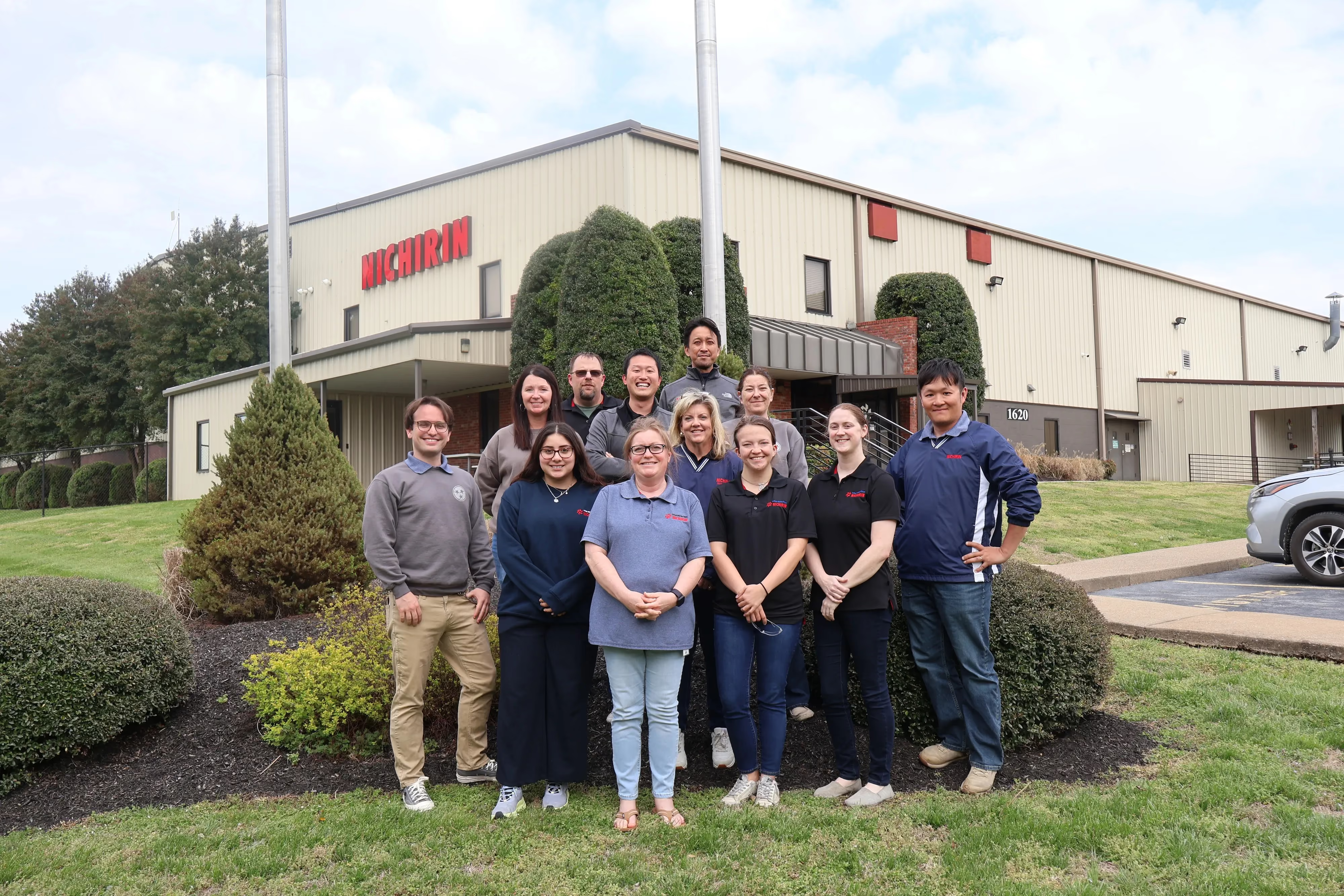
Nichirin Tennessee Inc., a key North American subsidiary of Nichirin Co., Ltd., manufactures and assembles automotive hoses for global OEMs. Historically, many workflows relied heavily on Japanese expatriate staff, whose experience and accumulated knowledge were essential for accessing drawings, understanding past decisions, and supporting daily operations.
Recognizing the limitations of this structure, the company saw an opportunity to modernize its workflows and enable its local teams to operate more independently.
Taking a proactive approach, Nichirin Tennessee explored adopting CADDi as a solution. This initiative was more than a software deployment; it was a strategic effort to build a more transparent, accessible, and self-reliant organization.
Breaking the Knowledge Barrier
Today, any team member can instantly retrieve drawings, BOM data, and necessary historical information using keywords or similarity search, without relying on drawing numbers or individual experience. Information that was once concentrated among a few veteran engineers is now broadly accessible across departments.
This shift has significantly improved the onboarding process. New team members can locate technical specifications and past customer relationships without prior context. In the past, new employees frequently relied on managers to identify relevant data—an approach that was time-consuming for both trainers and trainees. Today, many of these tasks are handled independently.
{{quote-1}}
A Cultural Shift Toward Ownership
As a result, Nichirin has significantly reduced the time required to search for information, directly improving quoting turnaround and allowing a focus on higher-value tasks. More importantly, the project is fostering a cultural shift: instead of immediately relying on supervisors, employees are encouraged to first search within CADDi, think independently, and take ownership of their work.
{{quote-2}}
Looking Ahead: A Unified Global Standard
By linking drawings, BOM data, quotations, and control cards, the company is ensuring that every department can use CADDi as their single source of truth, turning individual expertise into shared organizational strength. Building on this success, Nichirin is now expanding the initiative to Nichirin Flex USA, spanning manufacturing facilities in El Paso and Mexico.
Nichirin’s initiative demonstrates how digital transformation begins with people—with the willingness to rethink existing workflows and the determination to turn individual knowledge into shared organizational strength. As the company continues to scale this model across its global operations, it is setting a strong example of how to build a truly connected, data-driven manufacturing organization.
Ready to see CADDi Drawer in action?
Get a personalized demo.


"I was able to start working smoothly from day one. Even without prior knowledge or detailed instructions, the system was intuitive enough to search and navigate on my own."

"Our goal wasn't just to implement new software—it was to eliminate barriers and operate as one unified team. CADDi is a tool, but the real success comes from our team's commitment to make knowledge accessible and use it to optimize our workflow."



.png)

