.svg)


.png)



%201.svg)
As experienced specialists aged and retired, Omron saw valuable knowledge disappear along with them, while what remained stayed locked in siloed, disconnected databases. Division-level accountability structures compounded the problem, reinforcing organizational silos that kept teams from sharing what they knew.
%202.svg)
Omron has since pooled knowledge company-wide into a shared asset that business units can discover and apply well beyond where it originated. This has given rise to new, data-driven networks that connect people across the organization in ways the old siloed structure never allowed.
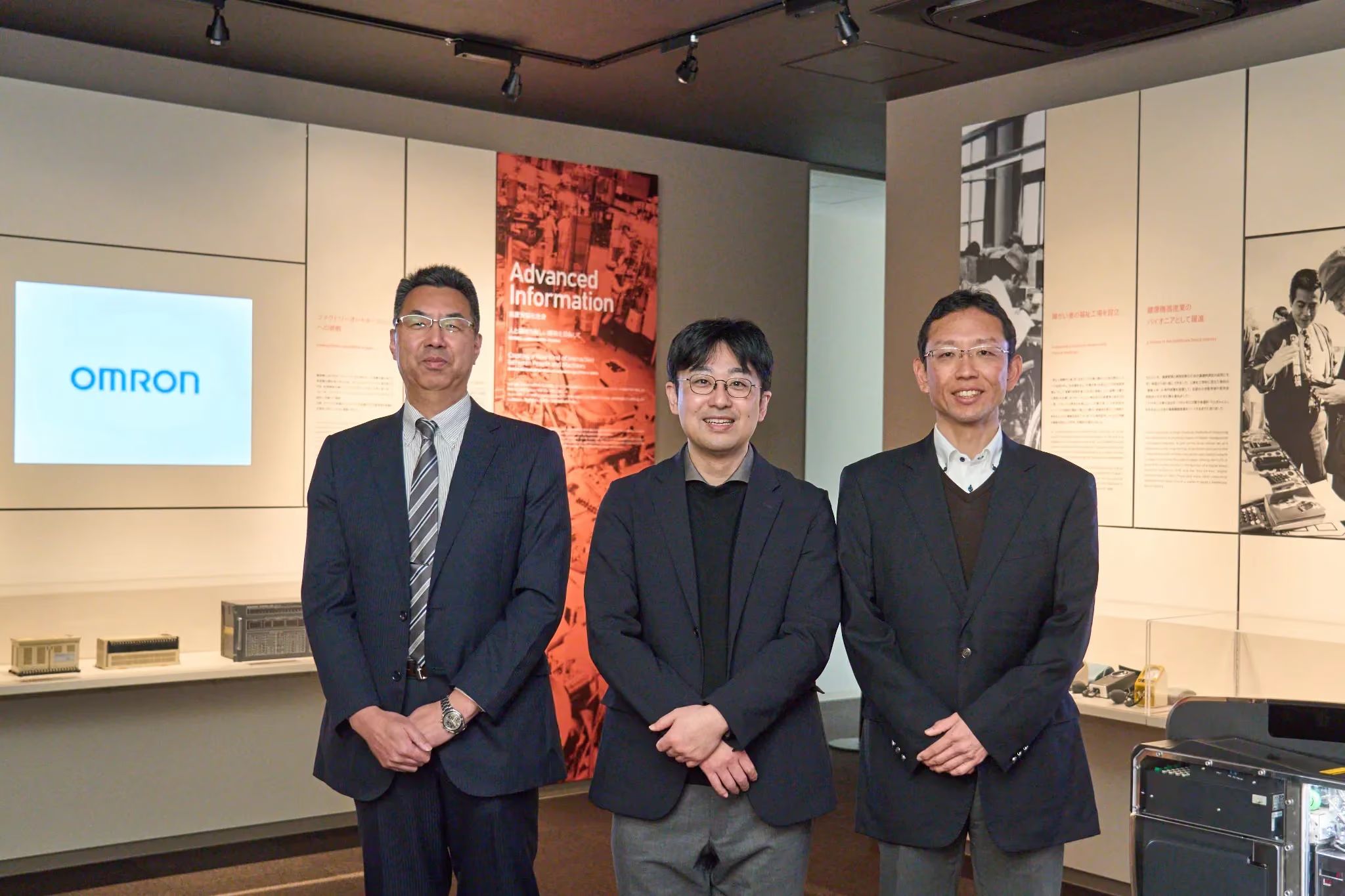
Building Design Quality at the Earliest Possible Stage: How Omron Is Turning Decades of Engineering Knowledge Into a Shared Asset
Omron Corporation is a global leader in industrial automation, electronic components, and control equipment, with a long-standing reputation for precision manufacturing built over decades of engineering expertise. Within Omron's Global Procurement, Quality & Logistics Division, the Processing Technology Group is responsible for building technology-driven cost structures into the company's machined parts, a role that depends on deep, well-organized engineering knowledge.
That knowledge, however, was becoming harder to access. Like much of the manufacturing industry, Omron is navigating an aging workforce of experienced parts designers. As those designers retire, they take with them years of tacit knowledge that was never fully documented, while the number of active development projects keeps growing. The result was a widening gap between the knowledge the company needed and the knowledge it could actually reach.
{{quote-3}}
A knowledge gap in plain sight
Nobuaki Kuwae, Group Leader of the Processing Technology Group, spends much of his time reviewing drawings as part of Omron's cost-structure work. Over time, he began noticing a pattern: knowledge that previous designers had built up simply wasn't carrying forward to the next project or the next generation of engineers.
Conversations with designers on the ground revealed why. As experienced staff retire, the number of development projects keeps climbing, leaving fewer experts to support them in depth. Knowledge and databases had also grown siloed over the years, so even when the right answer existed somewhere in the company, designers often couldn't reach it.
Omron's leadership recognized this as more than an efficiency problem. It was a design quality risk with implications across the business. That insight shaped how Omron approached the solution. Rather than chasing the short-term efficiency wins that many digital transformation projects prioritize, Omron focused on something further upstream: building quality into parts at the earliest possible point in development.
Getting the pilot off the ground
The push to adopt CADDi Drawer came from both directions at once. During a company-wide quality review, frontline engineers raised concerns about passing down their accumulated knowledge before it was too late. Leadership within the Global Procurement, Quality & Logistics Division heard those concerns and saw an opportunity in CADDi. The team aligned around a simple next step: run a pilot and find out.
{{quote-4}}
Support on the ground was immediate. Kuwae recalls the urgency designers expressed once the purpose behind CADDi Drawer was explained.
Instead of a broad rollout, they focused the pilot on the development department in the Electronic Components division and the sensor development department in the Control Equipment division, areas where the promotion team and CADDi's Customer Success team could provide close, hands-on support.
As users watched the platform improve in response to their feedback, and saw firsthand how quickly the underlying AI technology was advancing, their posture shifted. Even the skeptics who had once asked whether CADDi was really the right choice moved toward wanting to expand it further. Omron sees this as a genuine turning point in adoption.
From a search tool to a knowledge network
The most powerful results have come from something Omron didn't fully anticipate: knowledge moving across organizational lines. Once drawings, procurement data, and technical documentation from across the company were centralized in CADDi, designers began finding and applying insights that originated in entirely different business units, sites, or departments.
{{quote-2}}
For departments already short on their own experts, reaching another department's knowledge had previously been nearly impossible. CADDi Drawer removed that barrier by making it searchable.
That searchability is starting to evolve into something bigger: a way for people to find each other, not just documents. Surfacing previously invisible knowledge has sparked new conversations across the company, and those conversations are drawing out even more of the tacit expertise that used to disappear when someone retired.
What's next for Omron
Omron plans to expand this initiative well beyond the business units currently piloting it, turning what started as a targeted effort into a company-wide knowledge management strategy. The team also intends to shift day-to-day ownership from the head office to the individual business units themselves, a move designed to accelerate adoption and let each team shape CADDi Drawer around its own specific knowledge needs.
Ready to see CADDi Drawer in action?
Get a personalized demo.


"By reading through technical documents from other departments stored in CADDi, we've started to identify who the internal experts are across a range of technical areas. That problem has gone away, and now people can reach out directly to the relevant experts. That's a real shift."

"Because we're storing company-wide knowledge in CADDi, we're starting to see cases where knowledge from a different business unit, site, or department gets applied to deliver results elsewhere."
"In my work building cost structures around technology, I look at a lot of drawings, and I kept noticing cases where past knowledge hadn't been carried forward."
"The primary goal of adopting CADDi was to improve the design quality of parts. By building quality into parts from the ground up, we aim to raise the QCD of our products overall."




.png)

