.svg)

The Digital Engine: 5 Ways IT Leaders Can Rewire Automotive ROI through Manufacturing Intelligence


Table of Contents

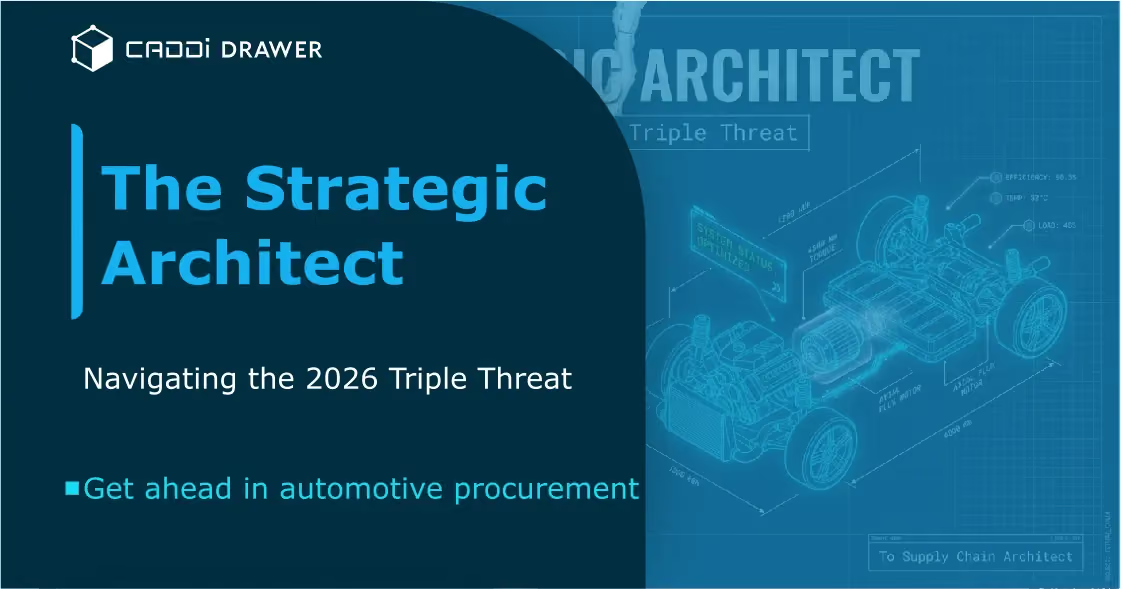
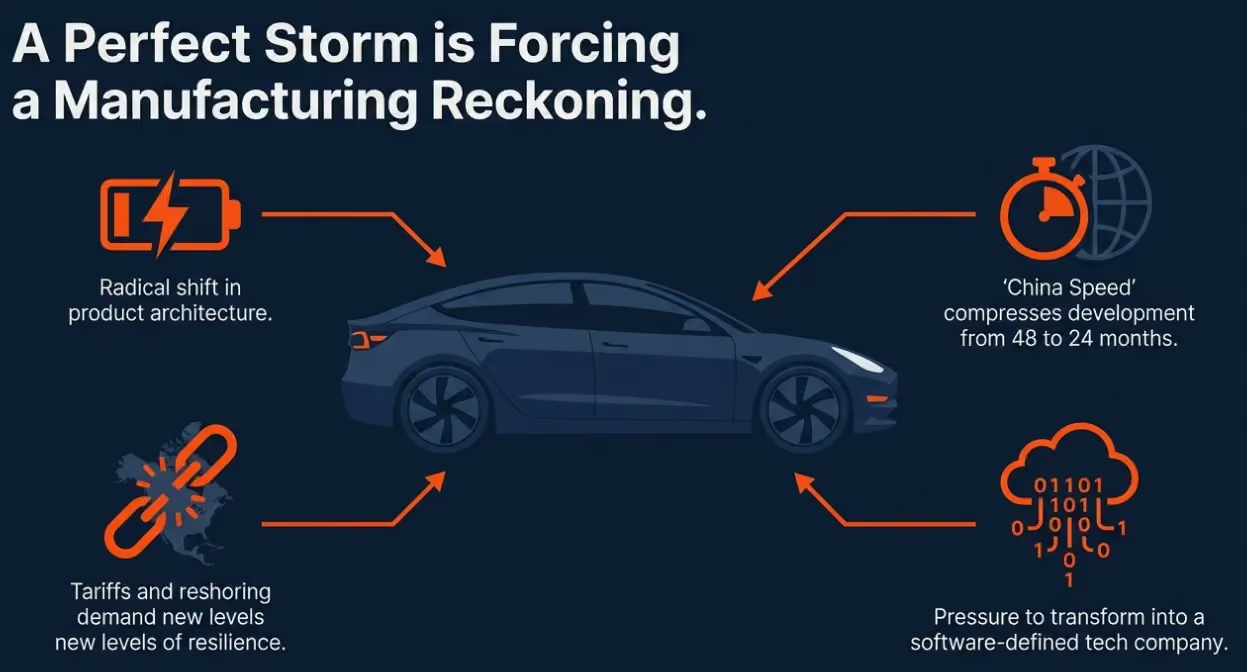
The American automotive sector in 2025 is navigating a "Triple Threat" to margins: the massive capital expenditure required for the EV transition, fluctuating production volumes, and the non-negotiable cost headwinds of active tariffs. For IT and Digital Transformation leaders, the mandate has shifted from merely supporting hardware production to transforming legacy manufacturers into agile "tech companies".
However, the path to this transformation is often blocked by a "patching paradox"—managing multi-million dollar machinery running on obsolete operating systems like Windows XP while simultaneously being pressured to deliver real-time cloud analytics. To bridge this gap, IT must move beyond traditional Systems of Record (SoR) to implement Systems of Insight (SoI) that turn fragmented data into a unified, actionable asset.
Here are five critical challenges for automotive IT leaders and how a manufacturing intelligence platform like CADDi can help address them.
1. Breaking the Silos: Unifying the Fragmented Product Record
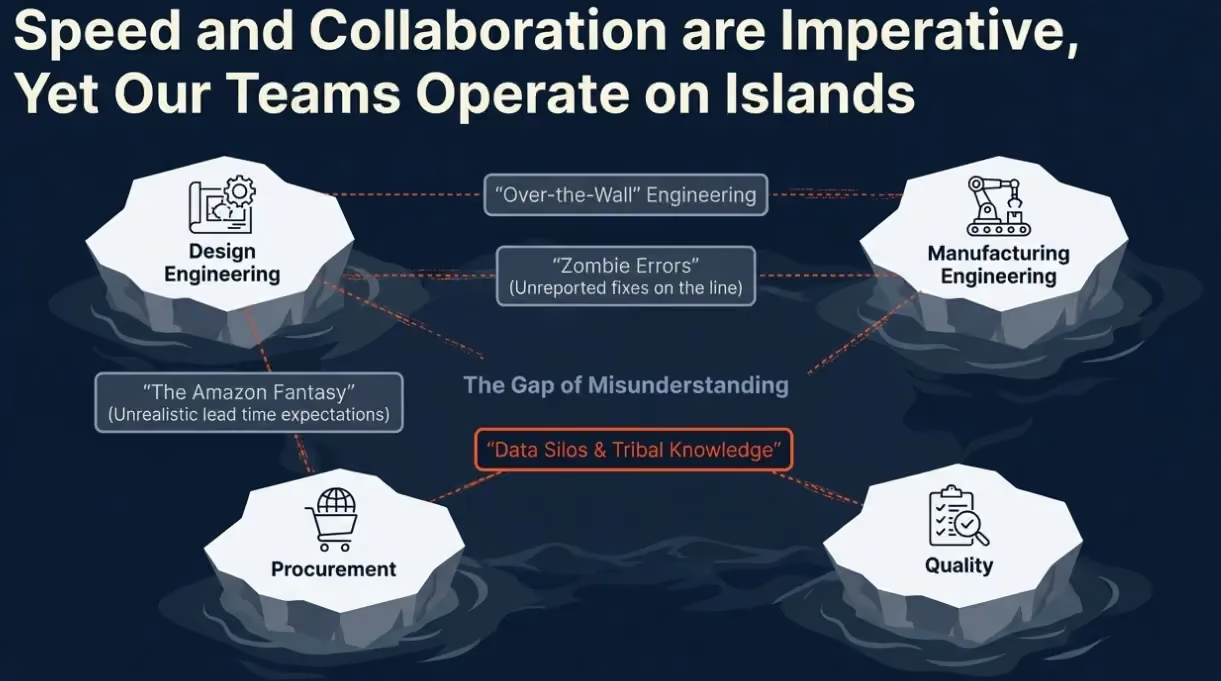
The Challenge: Automotive data is historically siloed: design data lives in PLM, purchasing data in ERP, and quality reports in isolated databases. This fragmentation prevents the holistic view needed for rapid strategic decision-making, leading to a "Two-Speed IT" environment where digital teams are hamstrung by rigid, linear validation protocols designed for steel, not code.
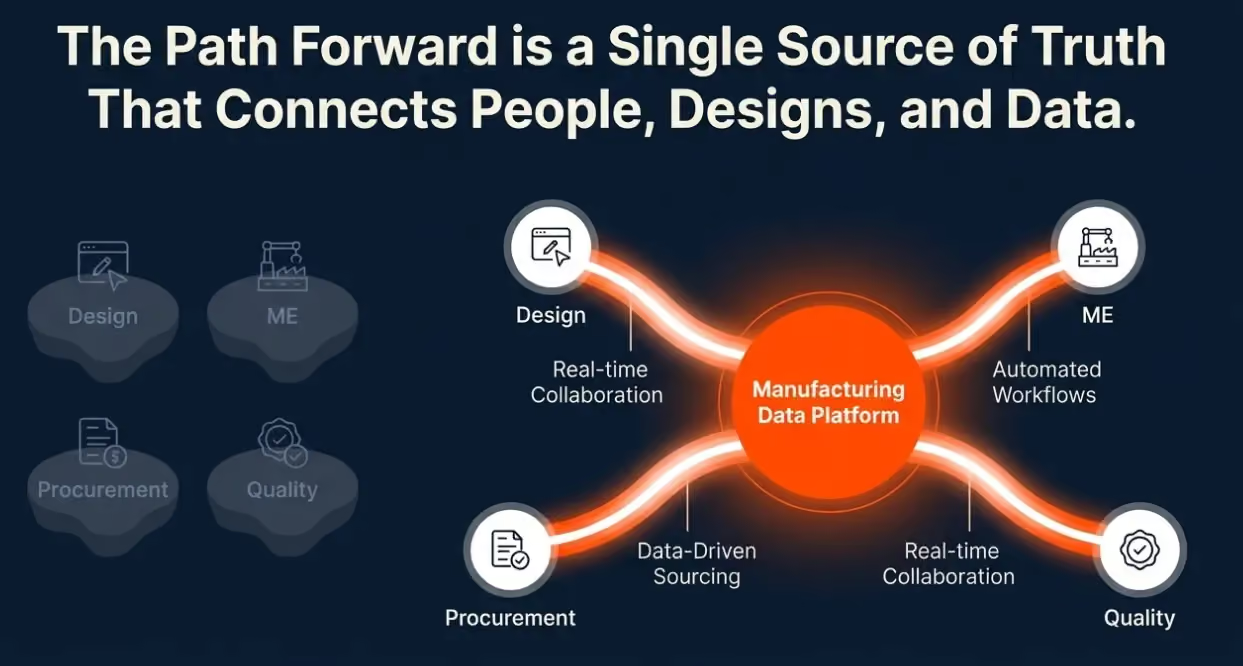
Why It Matters Now: In a volatile landscape, the inability to connect these dots leads to launch disruptions and missing traceability between design and supplier data. To survive margin compression, IT must provide a single source of truth that reflects the physical reality of the shop floor.
How CADDi Helps: CADDi Drawer functions as an AI-driven data lake, using the engineering drawing as the central, indispensable anchor point to link ERP, PLM, and quality systems. By creating a complete digital thread, it enables drawing-centric insights that are unattainable when data is locked in departmental silos. For a deeper look, see: Manufacturing Systems of Insight: Transforming Data into Value.
2. Building an AI-Ready Foundation from Legacy Data
The Challenge: Corporate mandates to modernize for AI adoption are ubiquitous, yet many IT leaders face an unclear ROI because their data foundations are built on "unstructured" assets. While the industry moves toward 3D, 99% of historical design data remains in 2D drawings, paper archives, or handwritten documents that traditional systems cannot parse.
Why It Matters Now: AI models are only as good as the data they ingest. Relying on manual data entry or inconsistent metadata tagging leads to a "redundancy tax," where engineers recreate parts because they cannot find existing ones.
How CADDi Helps: CADDi uses proprietary OCR-based AI to digitize and analyze the content of technical drawings themselves. It automatically extracts dimensions, materials, and notes, converting them into structured, searchable assets. This allows your organization to capitalize on decades of stranded intellectual property without costly manual data migration.
3. Mitigating the "Silver Tsunami" and Knowledge Drain
The Challenge: Automotive manufacturing faces a structural human capital crisis. As veteran engineers retire, they take decades of "tribal knowledge" with them—undocumented insights into design and production that are critical for continuity.
Why It Matters Now: The industry faces a projected shortage of 3.8 million workers by 2033. Furthermore, 72% of U.S. manufacturers report that outdated technology is actively preventing them from attracting and retaining a new generation of digitally-native talent.
How CADDi Helps: CADDi acts as an AI-driven "digital mentor," democratizing institutional knowledge. By providing instant access to the entire history of designs and procurement decisions through similarity search, new hires can become productive much faster. Observed results include an 84% reduction in time-to-productivity for new team members. Learn more in our report: The Labor Paradox: Navigating Manufacturing's Unsettling Reality.
4. Accelerating Agility in Sourcing and Tariff Compliance
The Challenge: The unpredictable nature of trade policy, including the reintroduction of auto part tariffs, requires IT to provide granular, real-time visibility into the non-U.S. content of every component to ensure USMCA compliance. Traditional systems struggle to track the material breakdown necessary for these complex legal arguments.
Why It Matters Now: Supply chain volatility has forced a shift from "Just-in-Time" to "Just-in-Case" models, which clutters the floor and ties up capital. Agility is now a survival metric.
How CADDi Helps: CADDi Drawer provides the integrated data required to quickly track component origins and material composition. Its patented similarity search allows procurement and engineering teams to identify alternative suppliers or material equivalents based on geometric specifications, providing a mechanism for rapid adaptation when faced with sudden shortages or policy shifts.

5. Proactive Quality Assurance and Recall Mitigation
The Challenge: The financial cost of component defects and subsequent recalls—such as the recent GM recall of 721,000 trucks—vastly outweighs any savings found in initial sourcing. Tracing failures back to specific suppliers across multi-year production runs is a manual nightmare for IT and Quality teams.
Why It Matters Now: Shorter validation windows for EVs increase the risk of systemic quality failures. IT must enable a move from reactive firefighting to predictive quality management.
How CADDi Helps: By establishing comprehensive traceability, CADDi links quality defect reports directly to specific design versions and supplier data. When a defect is identified, the system can instantly surface every other part in the portfolio with similar geometric features or materials, enabling surgical containment actions and preventing defects from proliferating across model years. (Download the full guide: From Reactive to Predictive: Using Historical Data to Reduce Scrap, Rework, and Warranty Claims).

Conclusion: Rewiring the Future of Mobility
For the automotive IT leader, the goal is clear: remove the friction so your teams can innovate. Success in the digital era no longer depends on merely ranking high on a scorecard of "connectivity," but on being the definitive source of truth that empowers the entire manufacturing lifecycle.
By transforming your legacy archives into a System of Insight, you move your organization from the instability of "Excel Hell" to the precision of data-driven excellence.
Ready to see how a drawing-centric AI platform can modernize your operations?
Book a personalized demo today or explore our interactive tour.
The American automotive sector in 2025 is navigating a "Triple Threat" to margins: the massive capital expenditure required for the EV transition, fluctuating production volumes, and the non-negotiable cost headwinds of active tariffs. For IT and Digital Transformation leaders, the mandate has shifted from merely supporting hardware production to transforming legacy manufacturers into agile "tech companies".
However, the path to this transformation is often blocked by a "patching paradox"—managing multi-million dollar machinery running on obsolete operating systems like Windows XP while simultaneously being pressured to deliver real-time cloud analytics. To bridge this gap, IT must move beyond traditional Systems of Record (SoR) to implement Systems of Insight (SoI) that turn fragmented data into a unified, actionable asset.
Here are five critical challenges for automotive IT leaders and how a manufacturing intelligence platform like CADDi can help address them.
1. Breaking the Silos: Unifying the Fragmented Product Record
The Challenge: Automotive data is historically siloed: design data lives in PLM, purchasing data in ERP, and quality reports in isolated databases. This fragmentation prevents the holistic view needed for rapid strategic decision-making, leading to a "Two-Speed IT" environment where digital teams are hamstrung by rigid, linear validation protocols designed for steel, not code.
Why It Matters Now: In a volatile landscape, the inability to connect these dots leads to launch disruptions and missing traceability between design and supplier data. To survive margin compression, IT must provide a single source of truth that reflects the physical reality of the shop floor.
How CADDi Helps: CADDi Drawer functions as an AI-driven data lake, using the engineering drawing as the central, indispensable anchor point to link ERP, PLM, and quality systems. By creating a complete digital thread, it enables drawing-centric insights that are unattainable when data is locked in departmental silos. For a deeper look, see: Manufacturing Systems of Insight: Transforming Data into Value.
2. Building an AI-Ready Foundation from Legacy Data
The Challenge: Corporate mandates to modernize for AI adoption are ubiquitous, yet many IT leaders face an unclear ROI because their data foundations are built on "unstructured" assets. While the industry moves toward 3D, 99% of historical design data remains in 2D drawings, paper archives, or handwritten documents that traditional systems cannot parse.
Why It Matters Now: AI models are only as good as the data they ingest. Relying on manual data entry or inconsistent metadata tagging leads to a "redundancy tax," where engineers recreate parts because they cannot find existing ones.
How CADDi Helps: CADDi uses proprietary OCR-based AI to digitize and analyze the content of technical drawings themselves. It automatically extracts dimensions, materials, and notes, converting them into structured, searchable assets. This allows your organization to capitalize on decades of stranded intellectual property without costly manual data migration.
3. Mitigating the "Silver Tsunami" and Knowledge Drain
The Challenge: Automotive manufacturing faces a structural human capital crisis. As veteran engineers retire, they take decades of "tribal knowledge" with them—undocumented insights into design and production that are critical for continuity.
Why It Matters Now: The industry faces a projected shortage of 3.8 million workers by 2033. Furthermore, 72% of U.S. manufacturers report that outdated technology is actively preventing them from attracting and retaining a new generation of digitally-native talent.
How CADDi Helps: CADDi acts as an AI-driven "digital mentor," democratizing institutional knowledge. By providing instant access to the entire history of designs and procurement decisions through similarity search, new hires can become productive much faster. Observed results include an 84% reduction in time-to-productivity for new team members. Learn more in our report: The Labor Paradox: Navigating Manufacturing's Unsettling Reality.
4. Accelerating Agility in Sourcing and Tariff Compliance
The Challenge: The unpredictable nature of trade policy, including the reintroduction of auto part tariffs, requires IT to provide granular, real-time visibility into the non-U.S. content of every component to ensure USMCA compliance. Traditional systems struggle to track the material breakdown necessary for these complex legal arguments.
Why It Matters Now: Supply chain volatility has forced a shift from "Just-in-Time" to "Just-in-Case" models, which clutters the floor and ties up capital. Agility is now a survival metric.
How CADDi Helps: CADDi Drawer provides the integrated data required to quickly track component origins and material composition. Its patented similarity search allows procurement and engineering teams to identify alternative suppliers or material equivalents based on geometric specifications, providing a mechanism for rapid adaptation when faced with sudden shortages or policy shifts.
5. Proactive Quality Assurance and Recall Mitigation
The Challenge: The financial cost of component defects and subsequent recalls—such as the recent GM recall of 721,000 trucks—vastly outweighs any savings found in initial sourcing. Tracing failures back to specific suppliers across multi-year production runs is a manual nightmare for IT and Quality teams.
Why It Matters Now: Shorter validation windows for EVs increase the risk of systemic quality failures. IT must enable a move from reactive firefighting to predictive quality management.
How CADDi Helps: By establishing comprehensive traceability, CADDi links quality defect reports directly to specific design versions and supplier data. When a defect is identified, the system can instantly surface every other part in the portfolio with similar geometric features or materials, enabling surgical containment actions and preventing defects from proliferating across model years. (Download the full guide: From Reactive to Predictive: Using Historical Data to Reduce Scrap, Rework, and Warranty Claims).
Conclusion: Rewiring the Future of Mobility
For the automotive IT leader, the goal is clear: remove the friction so your teams can innovate. Success in the digital era no longer depends on merely ranking high on a scorecard of "connectivity," but on being the definitive source of truth that empowers the entire manufacturing lifecycle.
By transforming your legacy archives into a System of Insight, you move your organization from the instability of "Excel Hell" to the precision of data-driven excellence.
Ready to see how a drawing-centric AI platform can modernize your operations?
Book a personalized demo today or explore our interactive tour.
Ready to see CADDi Drawer in action? Get a personalized demo.
Subscribe to our Blog!
.svg)
.svg)
.svg)

Related Resources