.svg)

Stop Being the Scapegoat: 5 Data-Driven Strategies for Heavy Machinery Procurement in 2025

Table of Contents

The heavy machinery manufacturing sector is defined by its complexity, demanding precision sourcing for everything from intricate hydraulics and massive steel castings to micro-level components. Procurement professionals within this vertical are the strategic foundation of the business, often feeling like the "offensive linemen"—essential to keeping production running but typically only noticed when something goes wrong. This environment demands that procurement teams evolve from mere cost-controllers to proactive risk managers and efficiency architects.
In 2025, persistent market volatility, rising material costs, and the need for process modernization mean the old ways of managing data—relying on tribal knowledge and "Excel Hell"—are no longer sustainable. You need a unified, intelligent data platform to handle the pressure.
Here are five critical pain points facing heavy machinery procurement today and how AI-driven manufacturing intelligence helps transform friction into resilience.
1. Breaking the Engineering-Procurement Data Divide
A persistent cultural and operational friction exists between engineering and procurement teams in heavy machinery manufacturing. Engineers prioritize strict functional specifications and performance, while procurement focuses on cost, compliance, and standardization. This misalignment often results in "spec comparison wars" and high inefficiency during the sourcing phase, delaying product development and potentially compromising cost savings.
Why It's Important Now: Bridging this gap through better cross-functional alignment is a top priority for mature organizations because achieving cost optimization and design innovation requires both teams to collaborate early and continuously. You cannot achieve substantial savings through Value Analysis/Value Engineering (VA/VE) if design intent and cost realities live in separate vacuums.
How CADDi Can Help: CADDi Drawer eliminates data silos by serving as an open, interoperable platform that links critical procurement data—including costs, supplier information, and quality reports—directly to the design drawing itself. This capability provides a "single source of truth" that all stakeholders can access. By seeing historical cost data side-by-side with the original engineering drawing, procurement can quickly identify where strict design elements drive unnecessary cost, fostering collaborative discussions on design standardization and VA/VE initiatives.
2. Establishing Data-Driven Negotiation Benchmarks
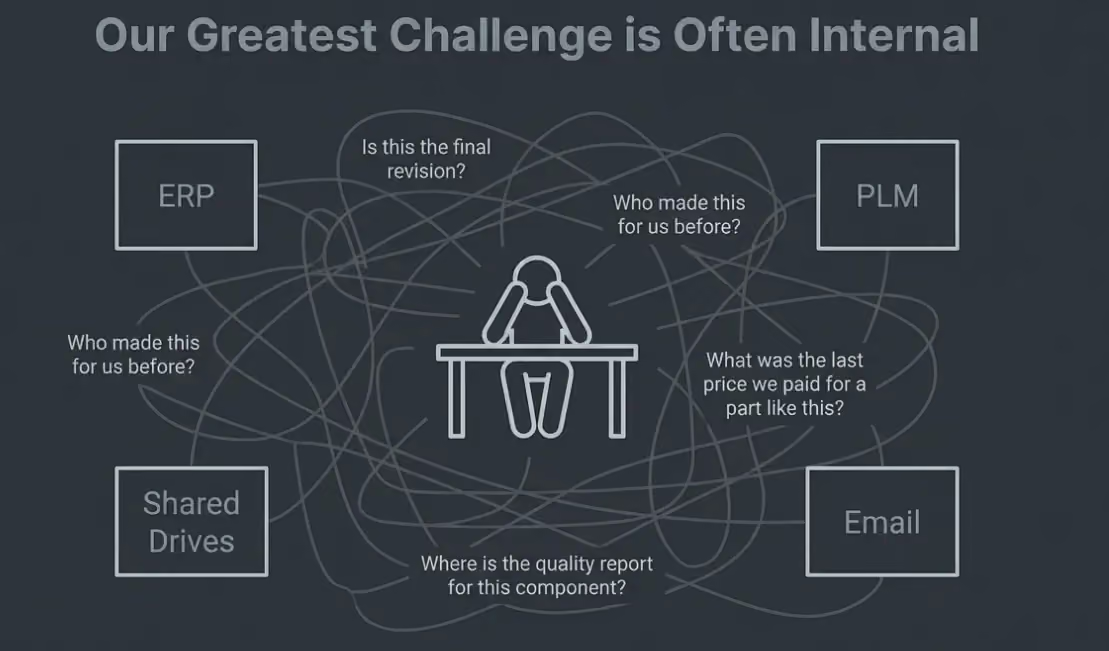
Negotiation leverage depends entirely on knowing what a part should cost, but most procurement teams lack a comprehensive, data-backed baseline. Instead, they navigate clunky ERP systems and ad-hoc spreadsheets, relying on inconsistent, fragmented data. This lack of accessibility means 60% of procurement professionals admit to sourcing parts at a higher price than what they knew was possible.
Why It's Important Now: With rising costs being the number one concern for manufacturing leaders, securing the best price on every deal is an existential mandate. To achieve strategic sourcing goals, procurement needs hard facts, not intuition, to negotiate effectively and ensure cost optimization.
How CADDi Can Help: CADDi revolutionizes negotiation by making historical data actionable. Using its patented similarity search, procurement can upload a new drawing and instantly find every geometrically similar part the company has ever sourced. This search surfaces linked data on past prices, volume, and quality, allowing teams to establish a realistic target price based on "actual" historical data. This approach transforms negotiation from a battle of wills into a science backed by undeniable, concrete facts.
3. Driving Strategic Supplier Consolidation
Parts proliferation—the uncontrolled accumulation of redundant and nearly identical components—is a significant drain on resources in complex manufacturing environments. Strategic supplier consolidation involves streamlining the supply base by bundling similar parts together and leveraging volume discounts with fewer, high-performing vendors.
Why It's Important Now: Consolidation reduces purchasing complexity, lowers the risk of managing volatile suppliers, and leverages economies of scale, directly impacting the bottom line. One manufacturer achieved a 22% reduction in fabricated part spend after consolidation enabled by CADDi's AI analysis.
How CADDi Can Help: Consolidating suppliers requires extensive manual cross-referencing to group similar parts, a task notoriously difficult with traditional systems. CADDi Drawer uses AI to analyze part shape and automatically group similar drawings across the entire archive. Procurement teams can instantly pinpoint redundant parts sourced from multiple vendors and confidently consolidate volumes. This capability is instrumental in driving VA/VE and supplier optimization efforts. To learn more about this process, consult our resource on Value-Based Sourcing: Reducing Costs Through Supplier Consolidation (Value Based Sourcing: How to Achieve Supplier Consolidation Through Commodity Alignment Webinar).
4. Navigating Geopolitical Uncertainty and Nearshoring
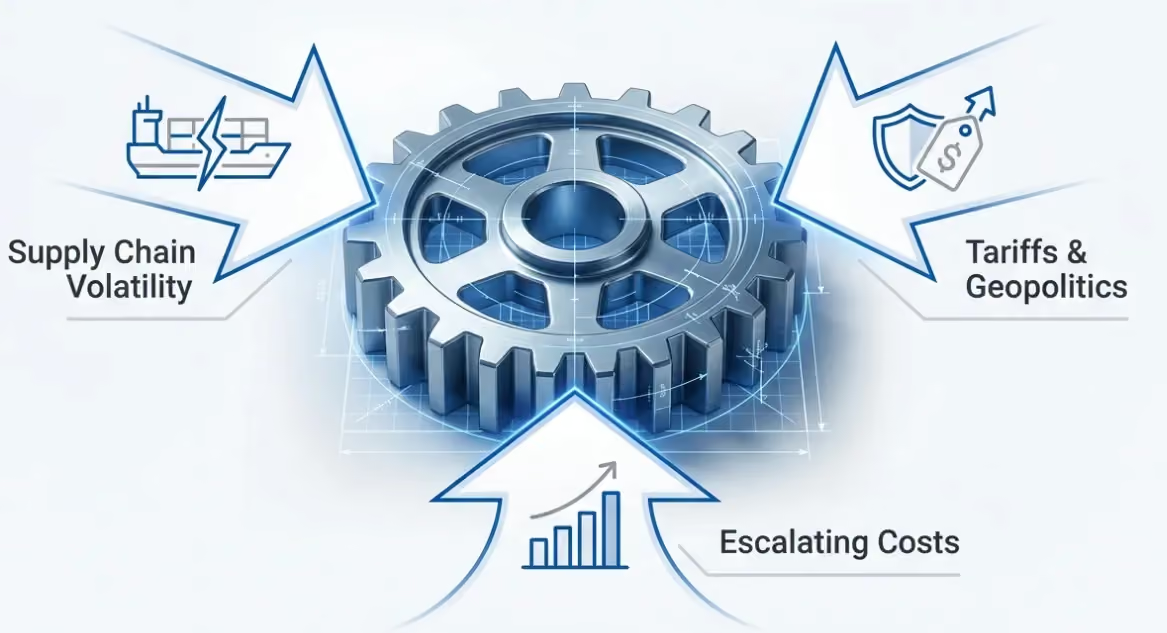
Geopolitical shifts, tariffs, and the push for nearshoring are forcing heavy machinery manufacturers to restructure their supply chains, with industrial hubs in Mexico (like Monterrey and Saltillo) becoming new centers of gravity for sourcing major components. This strategic pivot requires high levels of flexibility and agility to manage new logistics and cost structures.
Why It's Important Now: The destabilized global supply chain means manufacturers must be prepared to pivot rapidly away from unviable solutions due to unexpected tariffs or material shortages. Visibility into alternative sourcing options is crucial for supply chain resilience.
How CADDi Can Help: CADDi helps manufacturers build a procurement process that is Knowledgeable, Flexible, and Agile. It helps procurement quickly surface alternative suppliers for any given part, allowing rapid risk assessment and pivot planning. For nearshoring initiatives, the platform's ability to digitize and analyze drawings helps manufacturers understand their exact needs, and its similarity search can bundle like-parts into larger order packages to make domestic and nearshore suppliers more attractive, helping to offset potentially higher labor costs. For guidance on this topic, refer to CADDi's Tariff Response Center.
5. Capturing Tribal Knowledge and Accelerating Onboarding
The ongoing talent shortage means manufacturing is grappling with the retirement of veteran employees—the holders of invaluable "tribal knowledge" concerning part history, supplier reliability, and hidden quality issues. Without this knowledge digitized and centralized, new procurement hires face long onboarding times and must constantly interrupt senior staff, slowing overall efficiency.
Why It's Important Now: Rapidly bringing new talent up to speed is essential to maintain productivity during a talent shortage. You cannot afford to have new team members wasting hours tracking down data or recreating parts that already exist.
How CADDi Can Help: CADDi acts as a "digital mentor" for new hires and a centralized repository for institutional knowledge. The platform democratizes data access by linking all historical pricing, design, and supplier performance data to the drawing itself. New procurement employees can instantly search by sketching a part or using intuitive keywords (like "bumper" instead of an arbitrary ID) to find relevant past work, significantly reducing their reliance on senior staff and accelerating their time-to-productivity.
In the heavy machinery sector, where operational friction costs thousands and process modernization is critical for survival, managing your data intelligently is no longer optional. CADDi Drawer functions as the foundation for your "System of Insight" by transforming siloed drawing and procurement data into actionable intelligence. It allows your procurement team to move beyond being the "back of the blame train" and become the engine of strategic, data-driven transformation.
Ready to turn your hidden data assets into realized cost savings and resilience? Book a demo today.
The heavy machinery manufacturing sector is defined by its complexity, demanding precision sourcing for everything from intricate hydraulics and massive steel castings to micro-level components. Procurement professionals within this vertical are the strategic foundation of the business, often feeling like the "offensive linemen"—essential to keeping production running but typically only noticed when something goes wrong. This environment demands that procurement teams evolve from mere cost-controllers to proactive risk managers and efficiency architects.
In 2025, persistent market volatility, rising material costs, and the need for process modernization mean the old ways of managing data—relying on tribal knowledge and "Excel Hell"—are no longer sustainable. You need a unified, intelligent data platform to handle the pressure.
Here are five critical pain points facing heavy machinery procurement today and how AI-driven manufacturing intelligence helps transform friction into resilience.
1. Breaking the Engineering-Procurement Data Divide
A persistent cultural and operational friction exists between engineering and procurement teams in heavy machinery manufacturing. Engineers prioritize strict functional specifications and performance, while procurement focuses on cost, compliance, and standardization. This misalignment often results in "spec comparison wars" and high inefficiency during the sourcing phase, delaying product development and potentially compromising cost savings.
Why It's Important Now: Bridging this gap through better cross-functional alignment is a top priority for mature organizations because achieving cost optimization and design innovation requires both teams to collaborate early and continuously. You cannot achieve substantial savings through Value Analysis/Value Engineering (VA/VE) if design intent and cost realities live in separate vacuums.
How CADDi Can Help: CADDi Drawer eliminates data silos by serving as an open, interoperable platform that links critical procurement data—including costs, supplier information, and quality reports—directly to the design drawing itself. This capability provides a "single source of truth" that all stakeholders can access. By seeing historical cost data side-by-side with the original engineering drawing, procurement can quickly identify where strict design elements drive unnecessary cost, fostering collaborative discussions on design standardization and VA/VE initiatives.
2. Establishing Data-Driven Negotiation Benchmarks
Negotiation leverage depends entirely on knowing what a part should cost, but most procurement teams lack a comprehensive, data-backed baseline. Instead, they navigate clunky ERP systems and ad-hoc spreadsheets, relying on inconsistent, fragmented data. This lack of accessibility means 60% of procurement professionals admit to sourcing parts at a higher price than what they knew was possible.
Why It's Important Now: With rising costs being the number one concern for manufacturing leaders, securing the best price on every deal is an existential mandate. To achieve strategic sourcing goals, procurement needs hard facts, not intuition, to negotiate effectively and ensure cost optimization.
How CADDi Can Help: CADDi revolutionizes negotiation by making historical data actionable. Using its patented similarity search, procurement can upload a new drawing and instantly find every geometrically similar part the company has ever sourced. This search surfaces linked data on past prices, volume, and quality, allowing teams to establish a realistic target price based on "actual" historical data. This approach transforms negotiation from a battle of wills into a science backed by undeniable, concrete facts.
3. Driving Strategic Supplier Consolidation
Parts proliferation—the uncontrolled accumulation of redundant and nearly identical components—is a significant drain on resources in complex manufacturing environments. Strategic supplier consolidation involves streamlining the supply base by bundling similar parts together and leveraging volume discounts with fewer, high-performing vendors.
Why It's Important Now: Consolidation reduces purchasing complexity, lowers the risk of managing volatile suppliers, and leverages economies of scale, directly impacting the bottom line. One manufacturer achieved a 22% reduction in fabricated part spend after consolidation enabled by CADDi's AI analysis.
How CADDi Can Help: Consolidating suppliers requires extensive manual cross-referencing to group similar parts, a task notoriously difficult with traditional systems. CADDi Drawer uses AI to analyze part shape and automatically group similar drawings across the entire archive. Procurement teams can instantly pinpoint redundant parts sourced from multiple vendors and confidently consolidate volumes. This capability is instrumental in driving VA/VE and supplier optimization efforts. To learn more about this process, consult our resource on Value-Based Sourcing: Reducing Costs Through Supplier Consolidation (Value Based Sourcing: How to Achieve Supplier Consolidation Through Commodity Alignment Webinar).
4. Navigating Geopolitical Uncertainty and Nearshoring
Geopolitical shifts, tariffs, and the push for nearshoring are forcing heavy machinery manufacturers to restructure their supply chains, with industrial hubs in Mexico (like Monterrey and Saltillo) becoming new centers of gravity for sourcing major components. This strategic pivot requires high levels of flexibility and agility to manage new logistics and cost structures.
Why It's Important Now: The destabilized global supply chain means manufacturers must be prepared to pivot rapidly away from unviable solutions due to unexpected tariffs or material shortages. Visibility into alternative sourcing options is crucial for supply chain resilience.
How CADDi Can Help: CADDi helps manufacturers build a procurement process that is Knowledgeable, Flexible, and Agile. It helps procurement quickly surface alternative suppliers for any given part, allowing rapid risk assessment and pivot planning. For nearshoring initiatives, the platform's ability to digitize and analyze drawings helps manufacturers understand their exact needs, and its similarity search can bundle like-parts into larger order packages to make domestic and nearshore suppliers more attractive, helping to offset potentially higher labor costs. For guidance on this topic, refer to CADDi's Tariff Response Center.
5. Capturing Tribal Knowledge and Accelerating Onboarding
The ongoing talent shortage means manufacturing is grappling with the retirement of veteran employees—the holders of invaluable "tribal knowledge" concerning part history, supplier reliability, and hidden quality issues. Without this knowledge digitized and centralized, new procurement hires face long onboarding times and must constantly interrupt senior staff, slowing overall efficiency.
Why It's Important Now: Rapidly bringing new talent up to speed is essential to maintain productivity during a talent shortage. You cannot afford to have new team members wasting hours tracking down data or recreating parts that already exist.
How CADDi Can Help: CADDi acts as a "digital mentor" for new hires and a centralized repository for institutional knowledge. The platform democratizes data access by linking all historical pricing, design, and supplier performance data to the drawing itself. New procurement employees can instantly search by sketching a part or using intuitive keywords (like "bumper" instead of an arbitrary ID) to find relevant past work, significantly reducing their reliance on senior staff and accelerating their time-to-productivity.
In the heavy machinery sector, where operational friction costs thousands and process modernization is critical for survival, managing your data intelligently is no longer optional. CADDi Drawer functions as the foundation for your "System of Insight" by transforming siloed drawing and procurement data into actionable intelligence. It allows your procurement team to move beyond being the "back of the blame train" and become the engine of strategic, data-driven transformation.
Ready to turn your hidden data assets into realized cost savings and resilience? Book a demo today.
Ready to see CADDi Drawer in action? Get a personalized demo.
Subscribe to our Blog!
.svg)
.svg)
.svg)