.svg)

MD&M West 2026: CADDi Reflections

Table of Contents

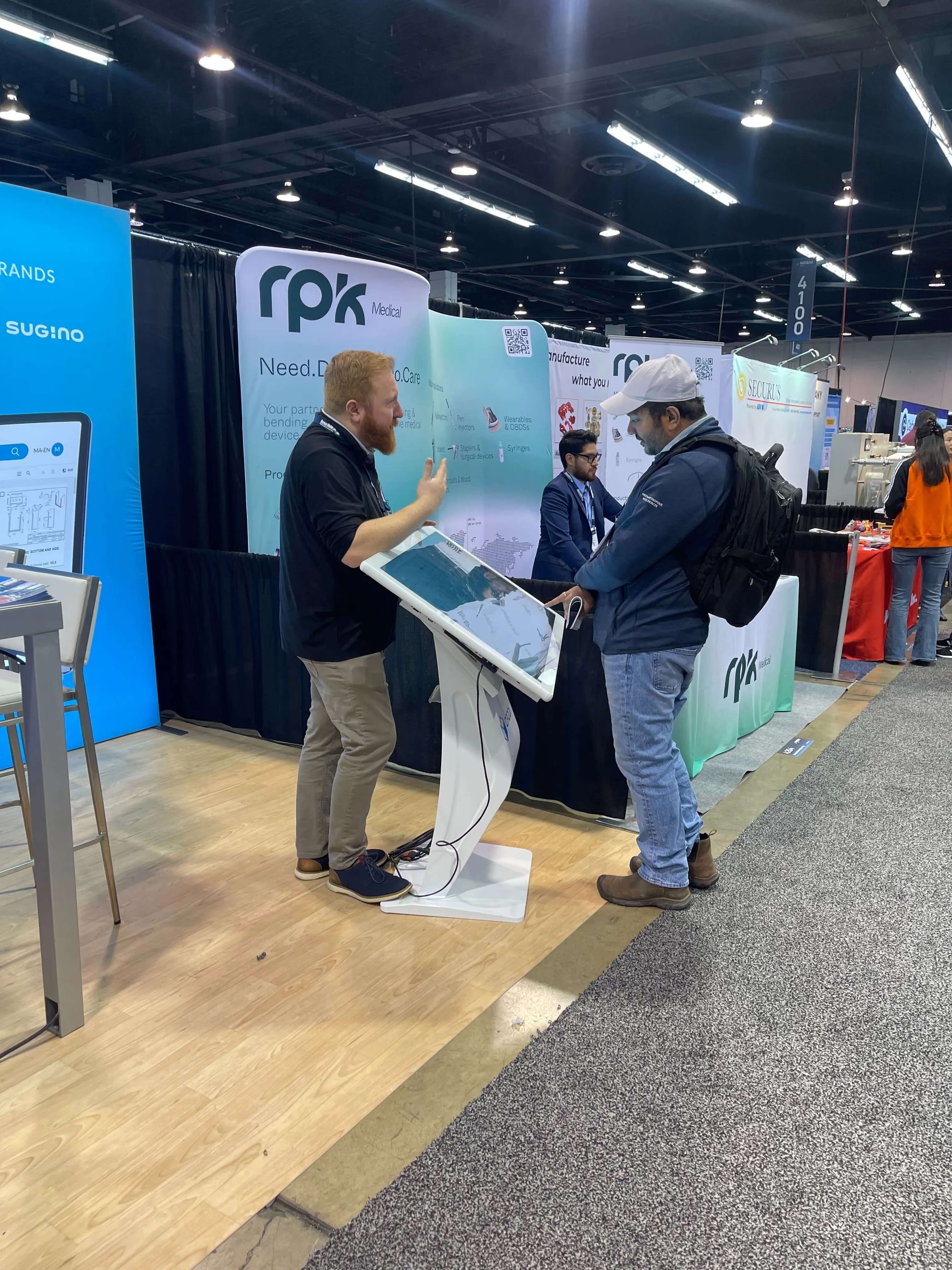
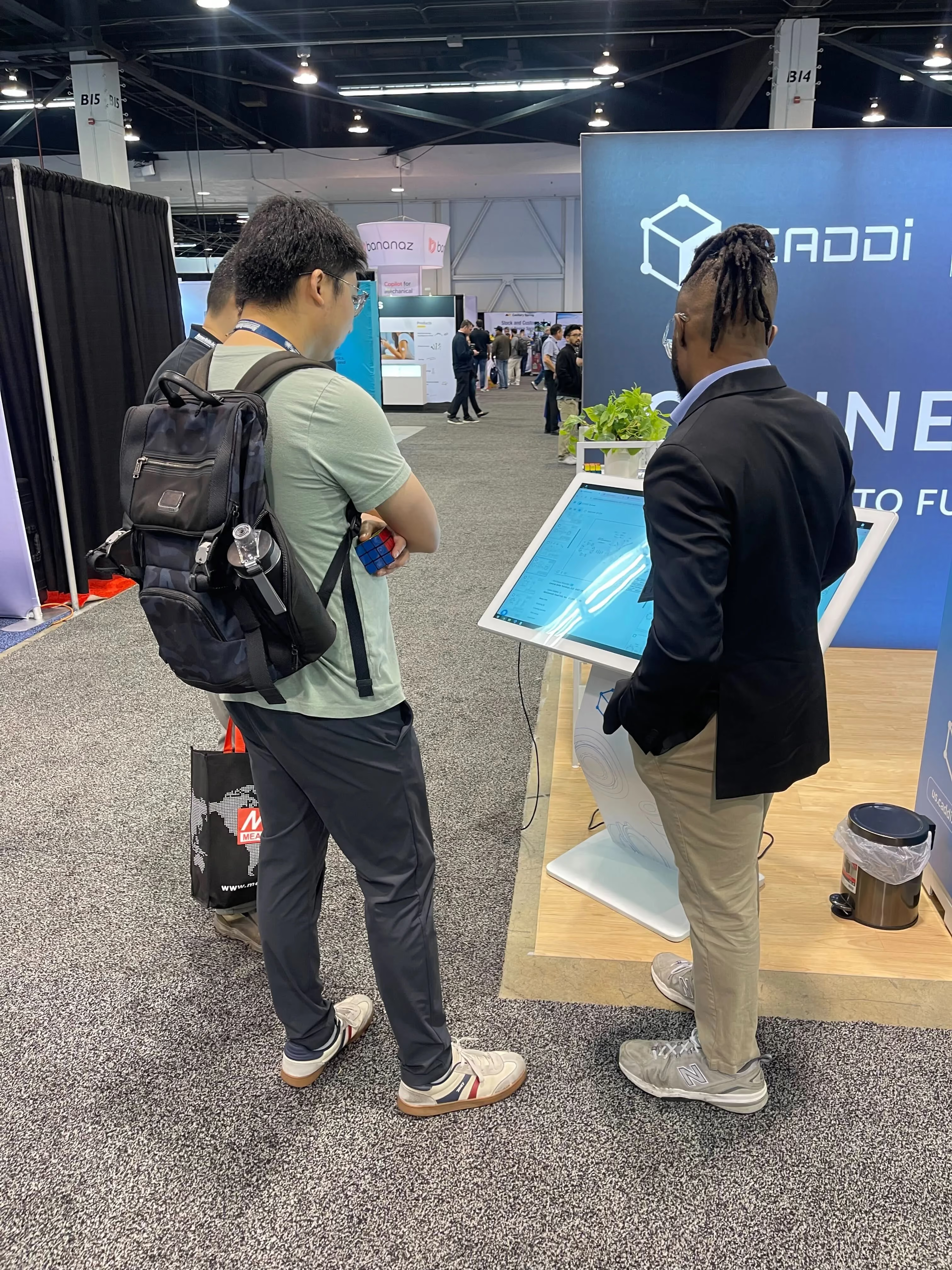
Last week, MD&M West brought together MedTech, automation, design and manufacturing, plastics and packaging. Engineering, operations and sourcing leaders attended to address current production and supply chain constraints.

Our colleagues across Sales, Partnerships and Marketing attended the conference. Their takeaways from firsthand conversations are summarized in these themes. The conversations below reflect what manufacturing leaders are prioritizing in 2026 and how those constraints connect directly to structured engineering data.

The "Silver Tsunami"
CADDi’s 2026 Manufacturing Outlook Study revealed that 79 percent of more than 200 manufacturing decision makers identified skilled labor shortages as their largest operational challenge. At the booth, the head of Engineering at a MedTech OEM shared, “My lead engineer is retiring in three months. He’s the only one who knows which of our legacy drawings can be repurposed for this new robotic surgical arm. If he leaves, we’re essentially starting from scratch on every ‘new’ part.”
CADDi structures and transforms legacy PDFs, even the handwritten ones from 20 years ago. The platform makes those files searchable by geometry so validated design history, tolerance decisions and regulatory context are accessible across the organization.
Flexible automation and "Quality by Design" (QbD)
Some manufacturing leaders are dealing with design transfer bottlenecks. An Operations lead at a contract manufacturer shared, “We’re trying to move toward modular automation, but every time a customer sends us a design change for a medical device, the design transfer process stalls. We spend weeks just identifying which existing fixtures or suppliers can handle the new tolerances.”
With CADDi’s platform, procurement and production teams can see those design changes in real time and immediately surface every similar part the company has manufactured. Historical tolerance ranges and supplier performance data are surfaced alongside the design so teams can make decisions without extended manual investigation. Structured part history shortens decision cycles.
Reshoring and supply chain resiliency
Another key pain point revealed in conversations was global supplier consolidation. During a discussion on reshoring, a Head of Strategic Sourcing explained, “We’re moving 30% of our plastic component sourcing back to North America to avoid tariffs. But honestly? It’s a mess. I have three different buyers unknowingly sourcing almost identical parts from three different suppliers at three different price points.”
Similar geometries often exist under different part numbers across business units. CADDi’s AI identifies those identical or similar parts across the entire enterprise dataset, even if the part numbers are completely different. Enterprise-wide part visibility supports standardization and spend control.
What This Means for Manufacturing in 2026 and Beyond
Manufacturers are turning to a unified, data-centric operating model to scale and grow their business. Experienced engineers are retiring, and companies risk losing the design knowledge they depend on. Automation programs depend on accessible historical drawings, tolerance data and supplier performance records. Bringing production back to North America adds complexity to sourcing, especially when similar parts exist under different names..
Key decision makers at manufacturing companies are assessing how engineering knowledge is captured, structured and reused across design, procurement and production. Interdisciplinary manufacturing leaders evaluate AI technology return on investment by whether it shortens lead times, reduces cost and improves decision making on the shop floor
In 2026 and beyond, organizations who are able to effectively operationalize fragmented engineering data into structured, searchable intelligence strengthen reuse, standardization and cost control across the enterprise.
Last week, MD&M West brought together MedTech, automation, design and manufacturing, plastics and packaging. Engineering, operations and sourcing leaders attended to address current production and supply chain constraints.
Our colleagues across Sales, Partnerships and Marketing attended the conference. Their takeaways from firsthand conversations are summarized in these themes. The conversations below reflect what manufacturing leaders are prioritizing in 2026 and how those constraints connect directly to structured engineering data.
The "Silver Tsunami"
CADDi’s 2026 Manufacturing Outlook Study revealed that 79 percent of more than 200 manufacturing decision makers identified skilled labor shortages as their largest operational challenge. At the booth, the head of Engineering at a MedTech OEM shared, “My lead engineer is retiring in three months. He’s the only one who knows which of our legacy drawings can be repurposed for this new robotic surgical arm. If he leaves, we’re essentially starting from scratch on every ‘new’ part.”
CADDi structures and transforms legacy PDFs, even the handwritten ones from 20 years ago. The platform makes those files searchable by geometry so validated design history, tolerance decisions and regulatory context are accessible across the organization.
Flexible automation and "Quality by Design" (QbD)
Some manufacturing leaders are dealing with design transfer bottlenecks. An Operations lead at a contract manufacturer shared, “We’re trying to move toward modular automation, but every time a customer sends us a design change for a medical device, the design transfer process stalls. We spend weeks just identifying which existing fixtures or suppliers can handle the new tolerances.”
With CADDi’s platform, procurement and production teams can see those design changes in real time and immediately surface every similar part the company has manufactured. Historical tolerance ranges and supplier performance data are surfaced alongside the design so teams can make decisions without extended manual investigation. Structured part history shortens decision cycles.
Reshoring and supply chain resiliency
Another key pain point revealed in conversations was global supplier consolidation. During a discussion on reshoring, a Head of Strategic Sourcing explained, “We’re moving 30% of our plastic component sourcing back to North America to avoid tariffs. But honestly? It’s a mess. I have three different buyers unknowingly sourcing almost identical parts from three different suppliers at three different price points.”
Similar geometries often exist under different part numbers across business units. CADDi’s AI identifies those identical or similar parts across the entire enterprise dataset, even if the part numbers are completely different. Enterprise-wide part visibility supports standardization and spend control.
What This Means for Manufacturing in 2026 and Beyond
Manufacturers are turning to a unified, data-centric operating model to scale and grow their business. Experienced engineers are retiring, and companies risk losing the design knowledge they depend on. Automation programs depend on accessible historical drawings, tolerance data and supplier performance records. Bringing production back to North America adds complexity to sourcing, especially when similar parts exist under different names..
Key decision makers at manufacturing companies are assessing how engineering knowledge is captured, structured and reused across design, procurement and production. Interdisciplinary manufacturing leaders evaluate AI technology return on investment by whether it shortens lead times, reduces cost and improves decision making on the shop floor
In 2026 and beyond, organizations who are able to effectively operationalize fragmented engineering data into structured, searchable intelligence strengthen reuse, standardization and cost control across the enterprise.
Ready to see CADDi Drawer in action? Get a personalized demo.
Subscribe to our Blog!
.svg)
.svg)
.svg)