.svg)

The Operations Manager’s Dilemma: 5 Strategies to Tame the Chaos of the Modern Tooling Shop

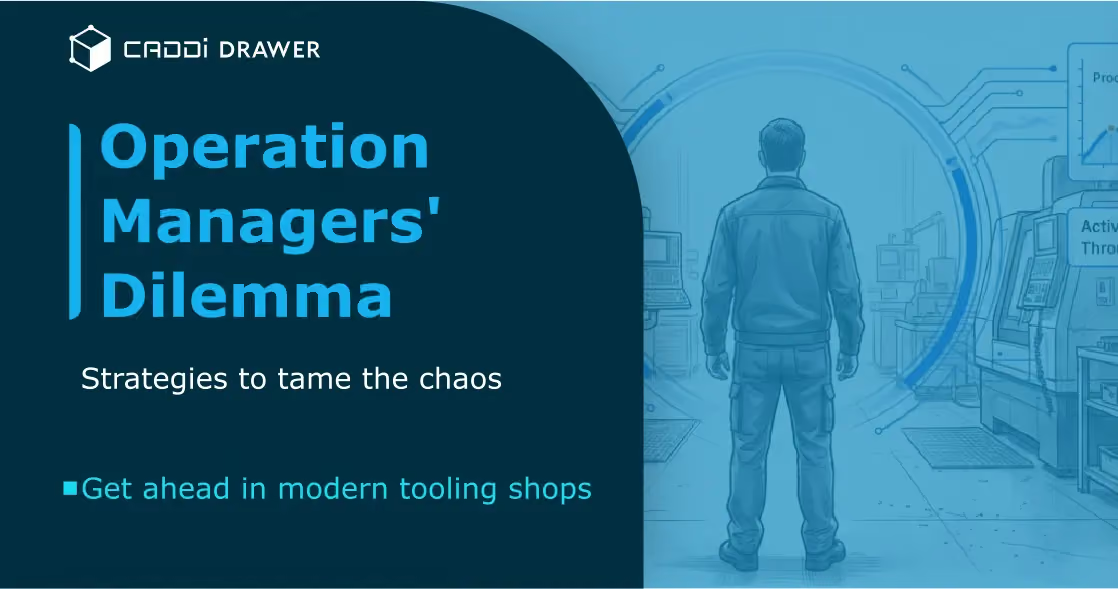
Table of Contents

The Operations Manager’s Dilemma: 5 Strategies to Tame the Chaos of the Modern Tooling Shop
For the Operations Manager in an American tooling shop, the current industrial landscape presents a paradox. On the surface, the sector is booming: reshoring initiatives and "Buy America" mandates are flooding shops with RFQs. Yet, the daily reality on the shop floor is one of unprecedented friction. You are no longer just managing metal cutting; you are fighting a multi-front war against a depleting workforce, volatile supply chains, and a "high-mix/low-volume" (HMLV) environment where standard work feels impossible to establish.
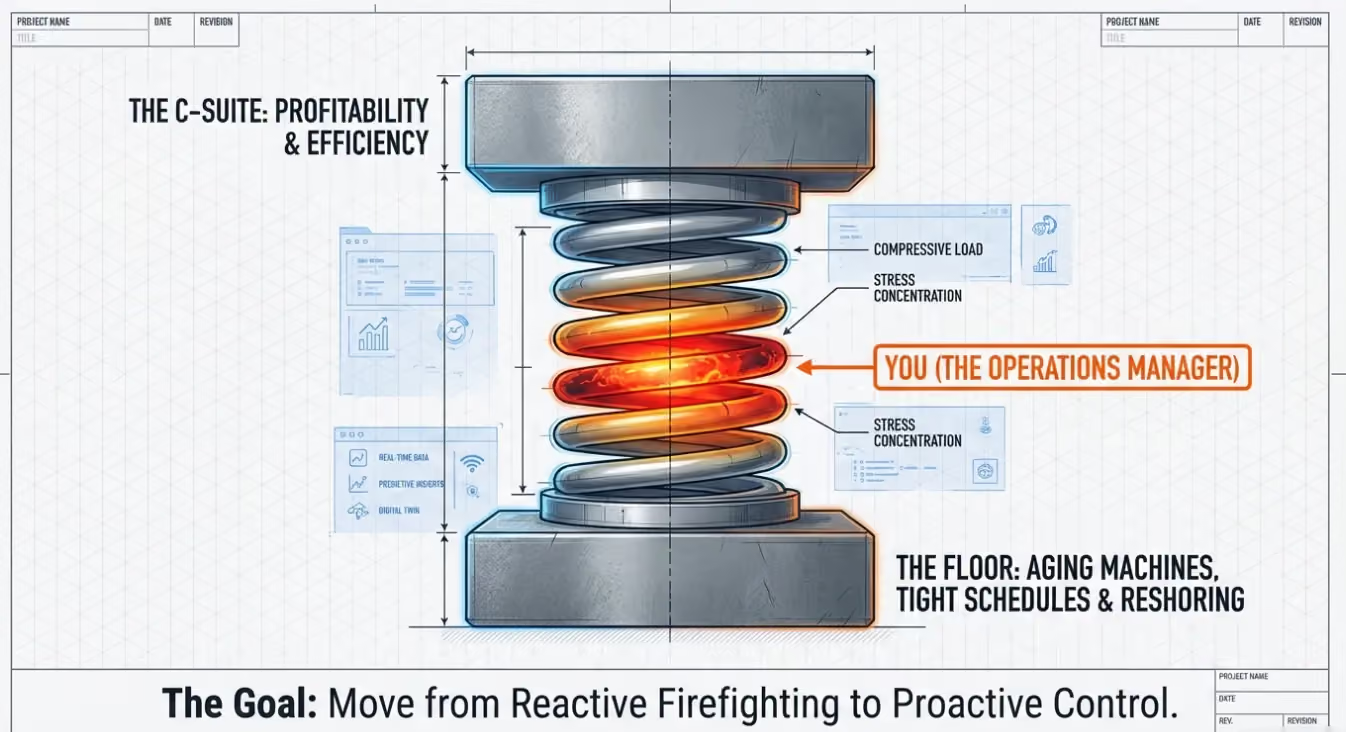
The modern Operations Manager acts as the "shock absorber" for the plant, absorbing pressure from the C-suite for profitability and frustration from the floor regarding aging equipment and tight schedules. To move from this state of reactive "firefighting" to proactive control, leadership must bridge the gap between the physical reality of the shop and the digital insights needed to run it efficiently.
Here are five critical challenges facing tooling operations today and how CADDi’s AI manufacturing intelligence platform helps resolve them.
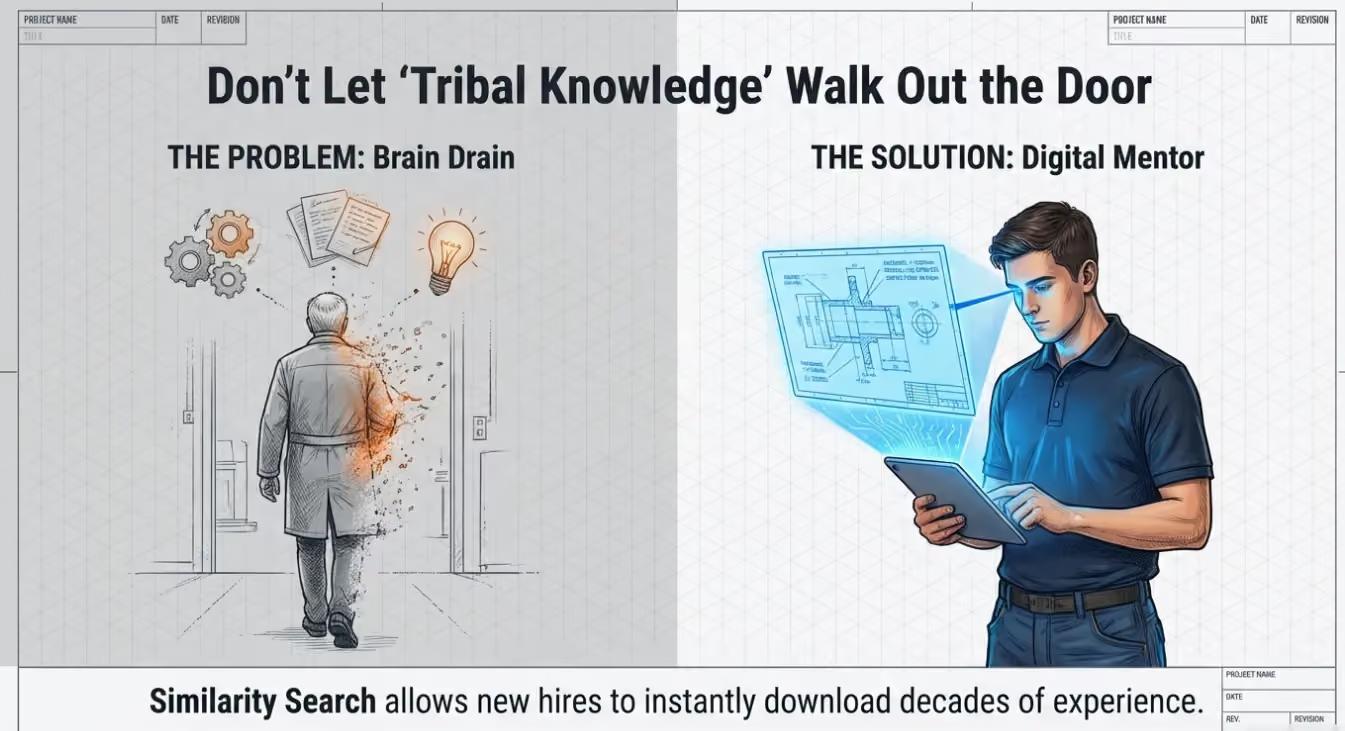
Capturing "Tribal Knowledge" Before It Walks Out the Door
The Challenge: The American tooling industry faces a demographic cliff. As the "Baby Boomer" generation of master toolmakers retires, they take decades of "tribal knowledge" with them—the unwritten "black art" of complex setups, the sound of a tool about to break, and the tricks for holding difficult castings. Because this generation rarely needed written instructions, very little of this expertise is documented, leaving the shop vulnerable to a massive loss of capability.
Why It Matters Now: Recruiting new talent is a grind, characterized by "ghosting" and a lack of specific skills among apprentices. You cannot afford for your new hires to relearn physics from scratch while your most experienced mentors are leaving.
How CADDi Helps: CADDi Drawer acts as a "digital mentor" and a repository for institutional knowledge. By digitizing legacy drawings and linking them with historical production notes, CAM data, and setup instructions, CADDi preserves the "how" and "why" of past jobs. New hires can use similarity search to find how a complex part was dealt with five years ago, effectively downloading the experience of a veteran toolmaker instantly. This accelerates training and prevents the "brain drain" from stalling production.
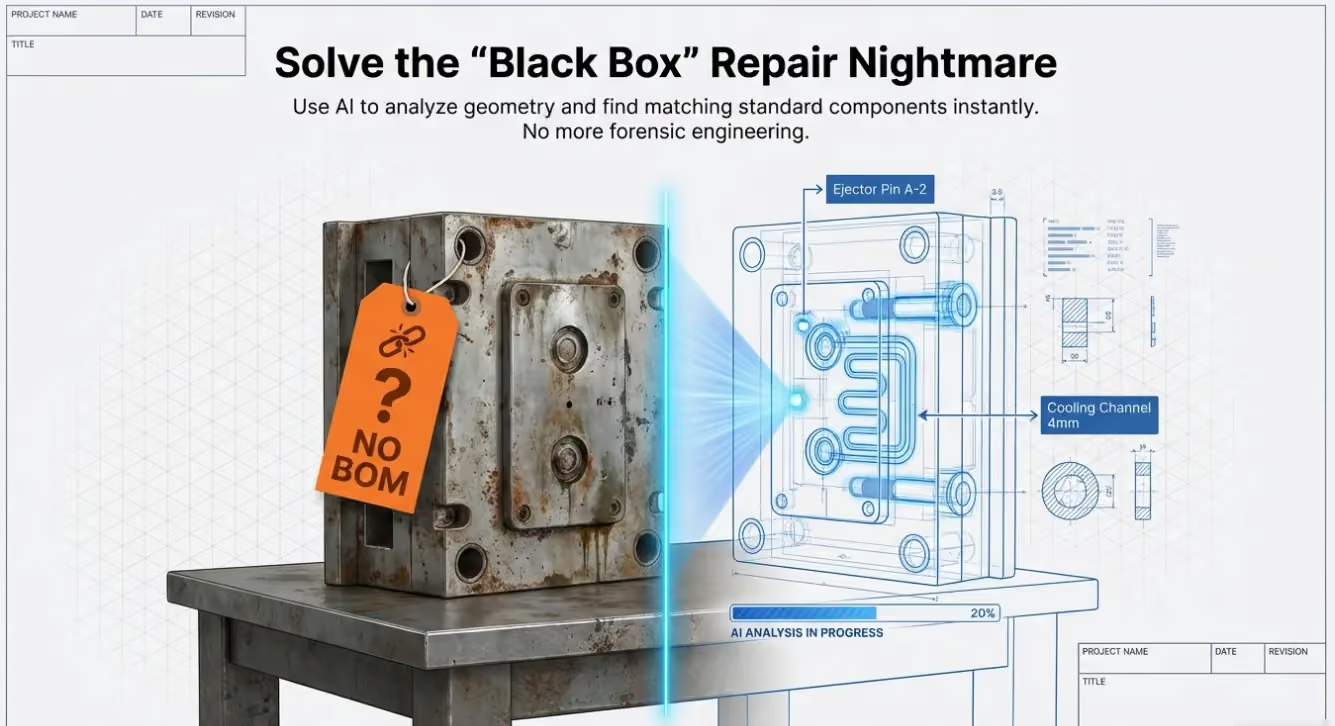
Solving the "Orphan Mold" and Repair Nightmare
The Challenge: Reshoring has brought an influx of "orphan molds"—tools originally built overseas (often in China) that are now being sent to U.S. shops for emergency repair or maintenance. These tools often arrive without Bills of Materials (BOMs), accurate 3D CAD data, or cooling schematics. Operations Managers must allocate high-value engineering resources to reverse-engineer these "black boxes" before a repair can even be attempted.
Why It Matters Now: This service work is urgent and disruptive, often breaking setups on machines scheduled for production. Without provenance data, simple repairs can turn into catastrophes if the steel grades or components are incompatible.
How CADDi Helps: CADDi allows you to digitize and index even the messiest legacy data associated with incoming tools. By using AI to analyze the geometry of the tool components, you can search your own archives for similar designs or standard components previously used. This reduces the time spent on "forensic engineering," allowing your team to identify compatible components or machining strategies faster and get the repair off the machine and out the door.
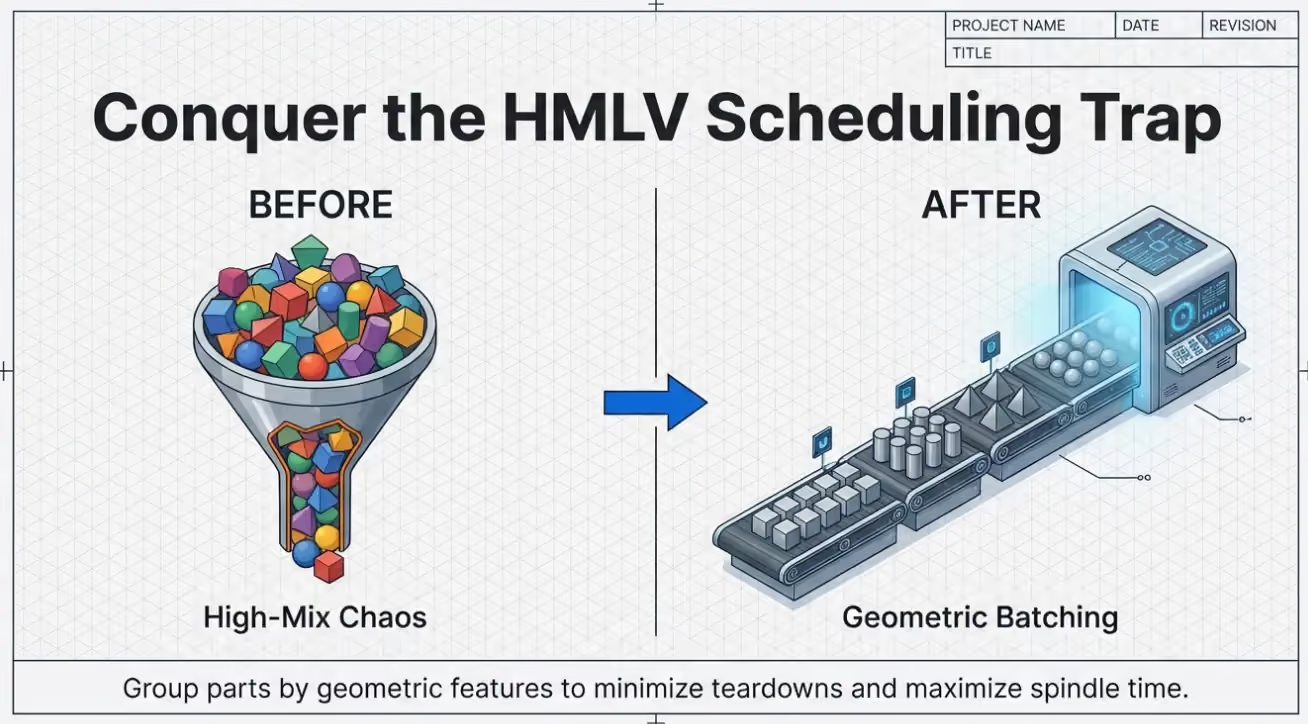
Conquering the HMLV Scheduling Trap
The Challenge: The American job shop has shifted toward High-Mix/Low-Volume (HMLV) production, leaving mass production to overseas competitors. While profitable, HMLV negates economies of scale. Machines spend more time in setup—changing fixtures and loading tools—than they do cutting metal. Scheduling hundreds of unique jobs with different routings is a chaos theory problem that often defeats traditional ERP scheduling modules.
Why It Matters Now: In an HMLV environment, setup time is the enemy of profit. If you cannot group jobs effectively to minimize changeovers, your spindle utilization plummets, and margins erode.
How CADDi Helps: CADDi turns your historical data into a scheduling advantage. By using similarity search to group parts based on geometric features (e.g., finding all parts that require a specific 5-axis setup or material type), Operations Managers can batch similar jobs together. This reduces the frequency of major tear-downs and setups, directly attacking the "setup dominance" that kills efficiency in job shops.
Navigating "Buy America" Compliance and Traceability
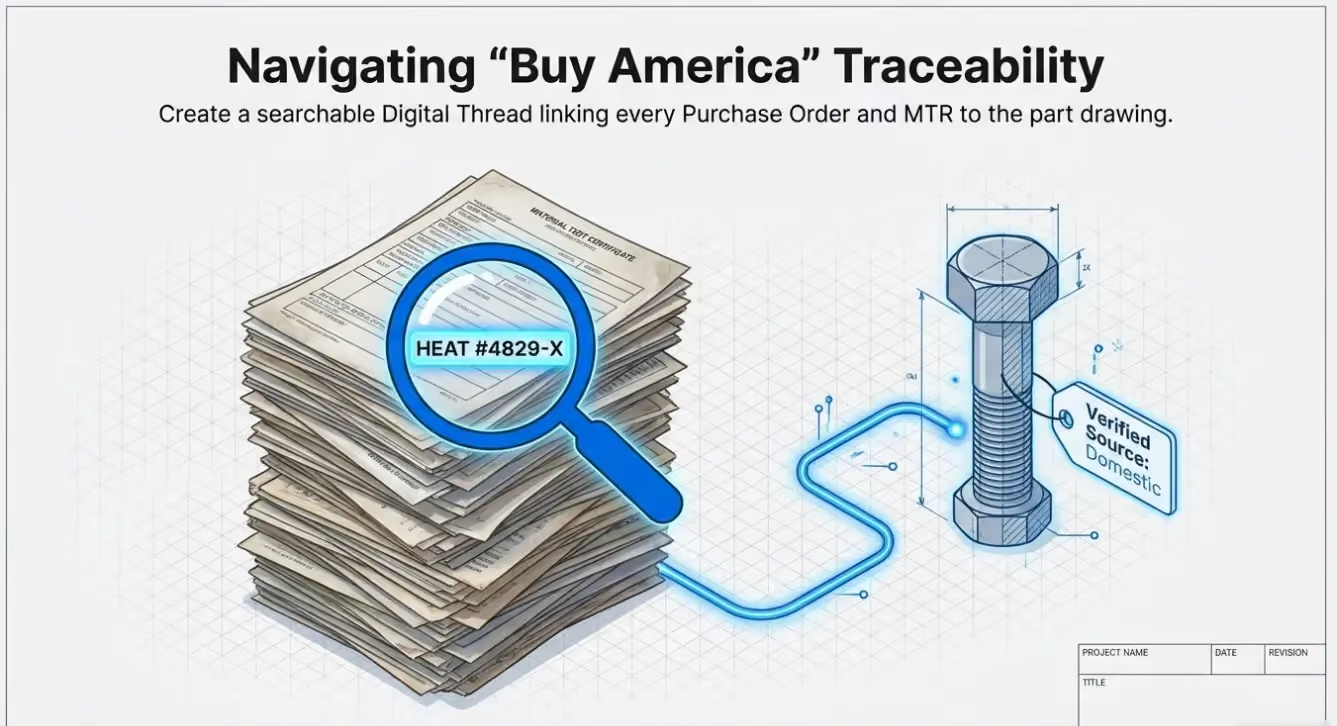
The Challenge: With the "Build America, Buy America" (BABA) Act, the provenance of materials has become a primary deliverable. Operations Managers effectively function as compliance officers, spending hours auditing Material Test Reports (MTRs) and ensuring that import materials do not migrate into domestic-only jobs. A single traceability error can lead to the rejection of an entire project.
Why It Matters Now: The administrative burden of compliance is distracting leadership from the shop floor. Sourcing domestic steel is difficult due to mill allocations, and managing the paper trail manually is a high-risk, non-value-added activity.
How CADDi Helps: CADDi creates a searchable "Digital Thread" for every job. By linking material certifications, purchase orders, and quality reports directly to the part drawing, you ensure unbroken traceability. CADDi’s proprietary OCR (Optical Character Recognition) can read text within these documents, allowing you to instantly search and verify heat numbers or material specs across thousands of files, ensuring audit readiness without the administrative headache.
5. Eliminating the "Eyeball Method" of Estimating
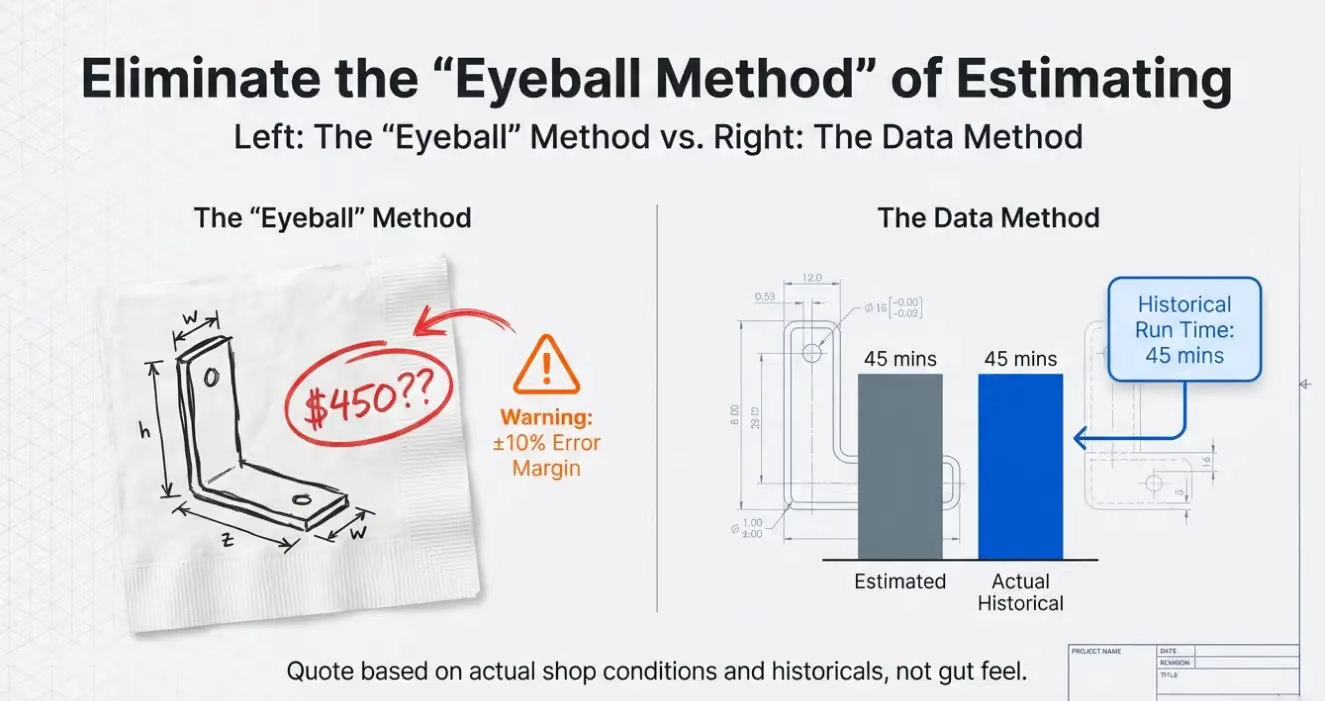
The Challenge: Many shops still rely on experienced managers "eyeballing" a print to estimate run times and costs. In 2026, with inflation and tighter tolerances, a 10% error in this "gut feel" estimation can wipe out the entire margin. Operations Managers often lack the data to verify if their quotes reflect reality because actuals are trapped in a "Monster Excel" sheet or a clunky ERP.
Why It Matters Now: You need to quote based on actual shop conditions, not ideal ones. Winning work is useless if the "hidden factory" of inefficiency makes it unprofitable.
How CADDi Helps: CADDi integrates historical costing data with design data. When a new RFQ comes in, you can instantly find similar parts you have manufactured in the past and see exactly what they cost to make—including the actual setup and run times, not just the estimates. This moves quoting from an art to a data-driven science, protecting your margins and allowing you to bid with confidence.
Conclusion: From Firefighting to Flow
The Operations Manager in the tooling sector is fighting a battle against entropy. To survive the skills gap and the complexity of modern manufacturing, you must systematize the craftsmanship that defines your shop. By leveraging a platform that turns your isolated drawings and data into a connected, searchable asset, you can stop fighting fires and start optimizing flow.
Ready to see how you can digitize your tribal knowledge and streamline your operations? Book a Demo to see CADDi Drawer in action.
The Operations Manager’s Dilemma: 5 Strategies to Tame the Chaos of the Modern Tooling Shop
For the Operations Manager in an American tooling shop, the current industrial landscape presents a paradox. On the surface, the sector is booming: reshoring initiatives and "Buy America" mandates are flooding shops with RFQs. Yet, the daily reality on the shop floor is one of unprecedented friction. You are no longer just managing metal cutting; you are fighting a multi-front war against a depleting workforce, volatile supply chains, and a "high-mix/low-volume" (HMLV) environment where standard work feels impossible to establish.
The modern Operations Manager acts as the "shock absorber" for the plant, absorbing pressure from the C-suite for profitability and frustration from the floor regarding aging equipment and tight schedules. To move from this state of reactive "firefighting" to proactive control, leadership must bridge the gap between the physical reality of the shop and the digital insights needed to run it efficiently.
Here are five critical challenges facing tooling operations today and how CADDi’s AI manufacturing intelligence platform helps resolve them.
Capturing "Tribal Knowledge" Before It Walks Out the Door
The Challenge: The American tooling industry faces a demographic cliff. As the "Baby Boomer" generation of master toolmakers retires, they take decades of "tribal knowledge" with them—the unwritten "black art" of complex setups, the sound of a tool about to break, and the tricks for holding difficult castings. Because this generation rarely needed written instructions, very little of this expertise is documented, leaving the shop vulnerable to a massive loss of capability.
Why It Matters Now: Recruiting new talent is a grind, characterized by "ghosting" and a lack of specific skills among apprentices. You cannot afford for your new hires to relearn physics from scratch while your most experienced mentors are leaving.
How CADDi Helps: CADDi Drawer acts as a "digital mentor" and a repository for institutional knowledge. By digitizing legacy drawings and linking them with historical production notes, CAM data, and setup instructions, CADDi preserves the "how" and "why" of past jobs. New hires can use similarity search to find how a complex part was dealt with five years ago, effectively downloading the experience of a veteran toolmaker instantly. This accelerates training and prevents the "brain drain" from stalling production.
Solving the "Orphan Mold" and Repair Nightmare
The Challenge: Reshoring has brought an influx of "orphan molds"—tools originally built overseas (often in China) that are now being sent to U.S. shops for emergency repair or maintenance. These tools often arrive without Bills of Materials (BOMs), accurate 3D CAD data, or cooling schematics. Operations Managers must allocate high-value engineering resources to reverse-engineer these "black boxes" before a repair can even be attempted.
Why It Matters Now: This service work is urgent and disruptive, often breaking setups on machines scheduled for production. Without provenance data, simple repairs can turn into catastrophes if the steel grades or components are incompatible.
How CADDi Helps: CADDi allows you to digitize and index even the messiest legacy data associated with incoming tools. By using AI to analyze the geometry of the tool components, you can search your own archives for similar designs or standard components previously used. This reduces the time spent on "forensic engineering," allowing your team to identify compatible components or machining strategies faster and get the repair off the machine and out the door.
Conquering the HMLV Scheduling Trap
The Challenge: The American job shop has shifted toward High-Mix/Low-Volume (HMLV) production, leaving mass production to overseas competitors. While profitable, HMLV negates economies of scale. Machines spend more time in setup—changing fixtures and loading tools—than they do cutting metal. Scheduling hundreds of unique jobs with different routings is a chaos theory problem that often defeats traditional ERP scheduling modules.
Why It Matters Now: In an HMLV environment, setup time is the enemy of profit. If you cannot group jobs effectively to minimize changeovers, your spindle utilization plummets, and margins erode.
How CADDi Helps: CADDi turns your historical data into a scheduling advantage. By using similarity search to group parts based on geometric features (e.g., finding all parts that require a specific 5-axis setup or material type), Operations Managers can batch similar jobs together. This reduces the frequency of major tear-downs and setups, directly attacking the "setup dominance" that kills efficiency in job shops.
Navigating "Buy America" Compliance and Traceability
The Challenge: With the "Build America, Buy America" (BABA) Act, the provenance of materials has become a primary deliverable. Operations Managers effectively function as compliance officers, spending hours auditing Material Test Reports (MTRs) and ensuring that import materials do not migrate into domestic-only jobs. A single traceability error can lead to the rejection of an entire project.
Why It Matters Now: The administrative burden of compliance is distracting leadership from the shop floor. Sourcing domestic steel is difficult due to mill allocations, and managing the paper trail manually is a high-risk, non-value-added activity.
How CADDi Helps: CADDi creates a searchable "Digital Thread" for every job. By linking material certifications, purchase orders, and quality reports directly to the part drawing, you ensure unbroken traceability. CADDi’s proprietary OCR (Optical Character Recognition) can read text within these documents, allowing you to instantly search and verify heat numbers or material specs across thousands of files, ensuring audit readiness without the administrative headache.
5. Eliminating the "Eyeball Method" of Estimating
The Challenge: Many shops still rely on experienced managers "eyeballing" a print to estimate run times and costs. In 2026, with inflation and tighter tolerances, a 10% error in this "gut feel" estimation can wipe out the entire margin. Operations Managers often lack the data to verify if their quotes reflect reality because actuals are trapped in a "Monster Excel" sheet or a clunky ERP.
Why It Matters Now: You need to quote based on actual shop conditions, not ideal ones. Winning work is useless if the "hidden factory" of inefficiency makes it unprofitable.
How CADDi Helps: CADDi integrates historical costing data with design data. When a new RFQ comes in, you can instantly find similar parts you have manufactured in the past and see exactly what they cost to make—including the actual setup and run times, not just the estimates. This moves quoting from an art to a data-driven science, protecting your margins and allowing you to bid with confidence.
Conclusion: From Firefighting to Flow
The Operations Manager in the tooling sector is fighting a battle against entropy. To survive the skills gap and the complexity of modern manufacturing, you must systematize the craftsmanship that defines your shop. By leveraging a platform that turns your isolated drawings and data into a connected, searchable asset, you can stop fighting fires and start optimizing flow.
Ready to see how you can digitize your tribal knowledge and streamline your operations? Book a Demo to see CADDi Drawer in action.
Ready to see CADDi Drawer in action? Get a personalized demo.
Subscribe to our Blog!
.svg)
.svg)
.svg)