.svg)

The Mayor of a Small Industrial City: 5 Ways Plant Managers Can Restore Stability to Heavy Machinery Operations

Table of Contents

The Mayor of a Small Industrial City: 5 Ways Plant Managers Can Restore Stability to Heavy Machinery Operations
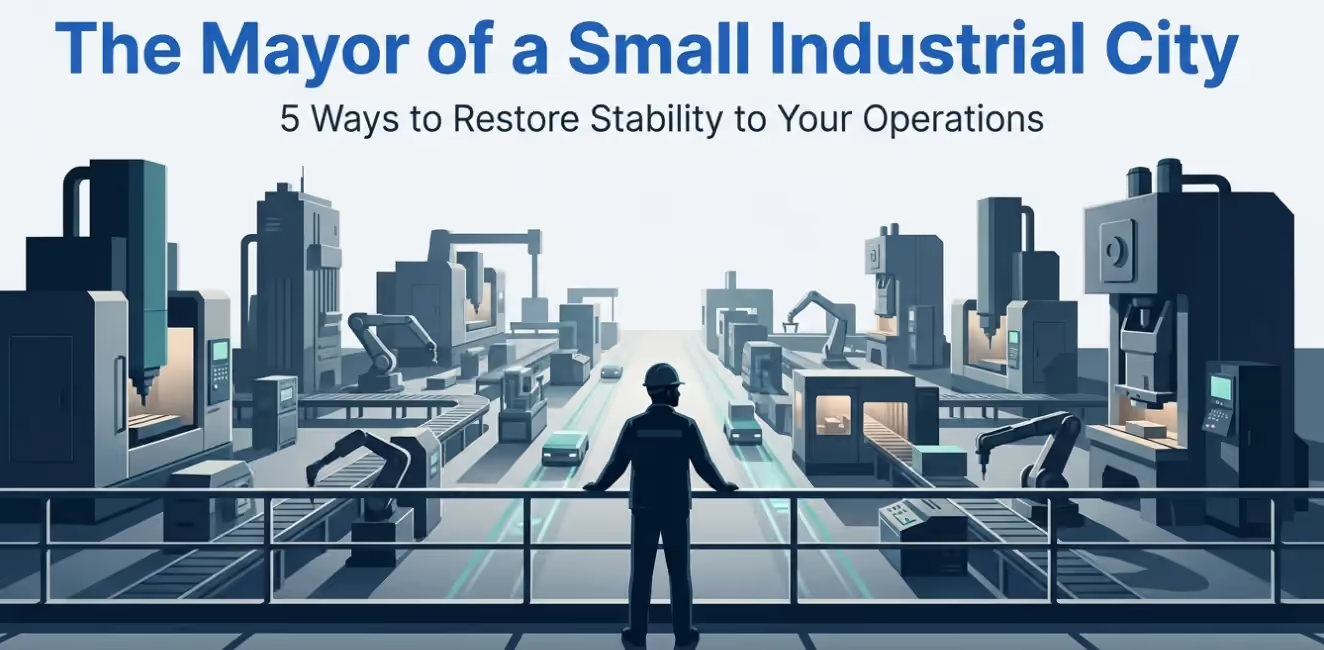
Managing a heavy machinery plant in 2025 is often compared to being the "mayor of a small town". You aren’t just overseeing machines; you are responsible for the safety, livelihood, and social cohesion of a workforce that often runs 24/7. While the corporate office talks about "digital twins" and "Industry 4.0," your reality is defined by "firefighting"—responding to machine breakdowns, supplier shortages, and the "ghost crews" caused by high absenteeism.
The "Two-Thirds Rule" (pick two: fast, cheap, or good) has been discarded. Today, you are expected to deliver all three while navigating an economic paradox where output may be contracting even as capital investment in automation spikes. To move from a culture of reactive crisis management to proactive stability, you must transform your manufacturing data from a dormant archive into an actionable System of Insight.
Here are five critical challenges facing heavy machinery Plant Managers today and how CADDi’s AI data platform addresses them.
1. Capturing Tribal Knowledge Before the "Silver Tsunami" Hits
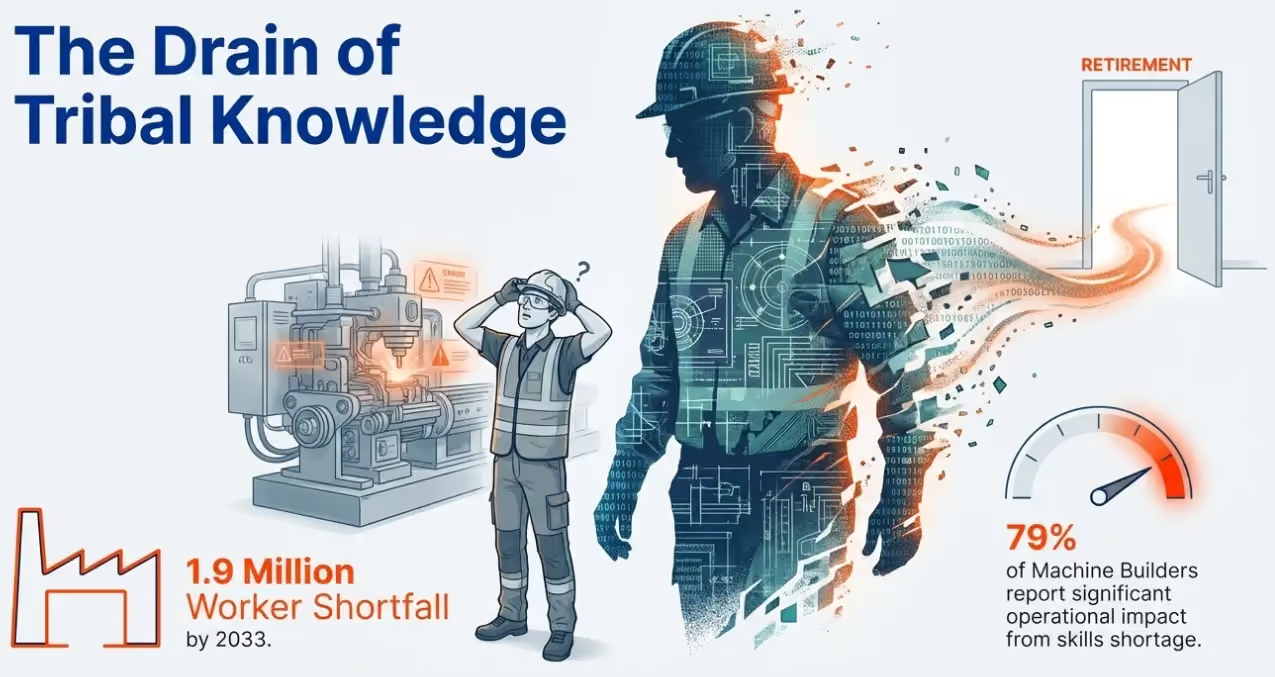
The Challenge: The heavy machinery sector is facing a demographic cliff. By 2033, the U.S. manufacturing sector faces a projected shortfall of 1.9 million workers. This isn't just a headcount issue; it's a catastrophic loss of "tribal knowledge"—the unwritten "feel" for how a 30-year-old press runs or the undocumented workarounds for legacy systems.
Why It Matters Now: Up to 79% of machine builders report that the skills shortage is significantly impacting operations. When a veteran maintenance tech or engineer retires, the "source code" of the plant’s operations often leaves with them, causing reliability to plummet.
How CADDi Helps: CADDi acts as an AI-driven "digital mentor". By digitizing and centralizing decades of fragmented IP—including handwritten notes and legacy 2D drawings—it creates a unified institutional repository. This allows new hires to access past projects and understand design intent instantly, reducing the time for new employees to become productive by 84%. Learn more about this in our report: The Labor Paradox: Navigating Manufacturing's Unsettling Reality.
2. Eliminating the $50,000-per-Minute Cost of Unplanned Downtime
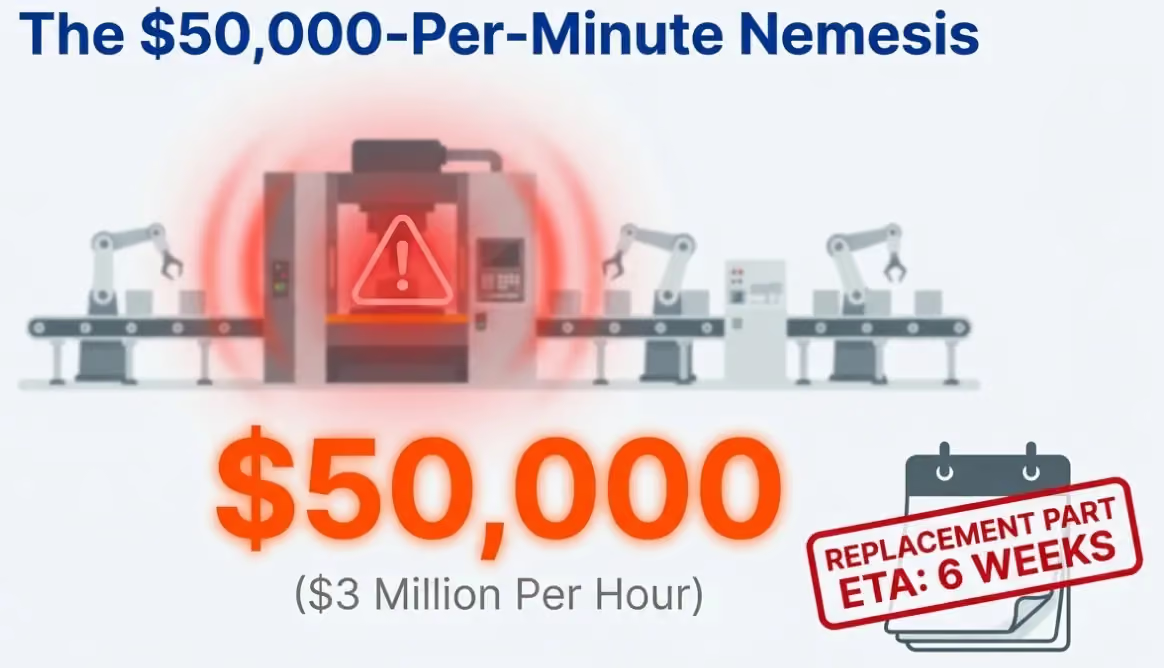
The Challenge: Unplanned downtime is the nemesis of the Plant Manager. In heavy industry, these costs can spiral to $50,000 per minute ($3 million per hour) when critical bottlenecks occur.
Why It Matters Now: The "fix" for downtime is increasingly delayed by supply chain whiplash; a replacement hydraulic pump that used to take days can now take six weeks. You cannot afford to wait for a failure to happen.
How CADDi Helps: CADDi transforms quality control from a reactive to a predictive system. By linking quality defect reports directly to design drawings and part history, your team can identify patterns of failure. If a component fails, similarity search can instantly find every other drawing in the system with similar geometric features or materials, allowing for surgical containment actions before a wider production halt occurs. Read more in our blog on going from reactive to proactive.
3. Bridging the IT/OT Divide and Escaping "Excel Hell"
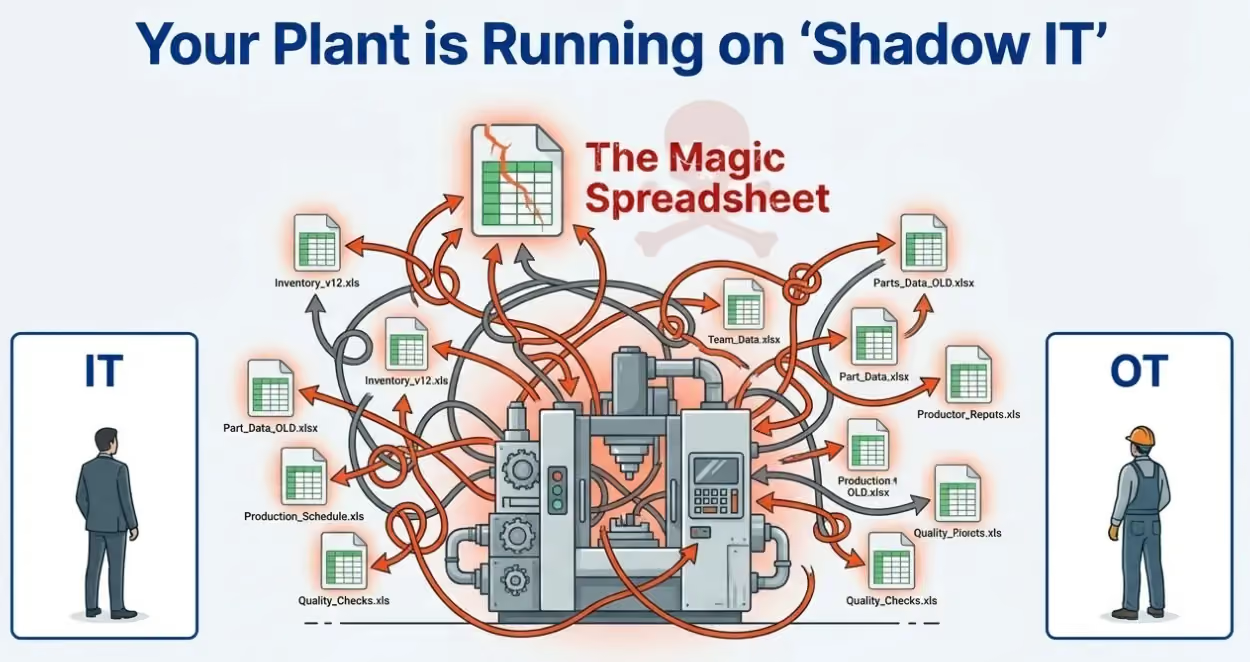
The Challenge: There is a profound cultural and technical collision between IT departments (focused on security/patching) and OT teams (focused on uptime). Because monolithic enterprise systems are often too rigid for the shop floor, managers retreat to "Shadow IT"—macro-laden Excel spreadsheets that run the plant but have no version control or backups.
Why It Matters Now: Relying on a "magic spreadsheet" created by an engineer who retired five years ago is a massive operational risk. If that file breaks or disappears, the line stops.
How CADDi Helps: CADDi Drawer serves as an AI-driven data lake that integrates fragmented records from ERP, PLM, and CAD systems. It uses the design drawing as the central anchor point to link all disparate data. This creates a single source of truth that provides the flexibility practitioners need without the risks of siloed spreadsheets. Check out our blog on how to build a manufacturing system of insight.
4. Managing High-Mix/Low-Volume (HMLV) Complexity
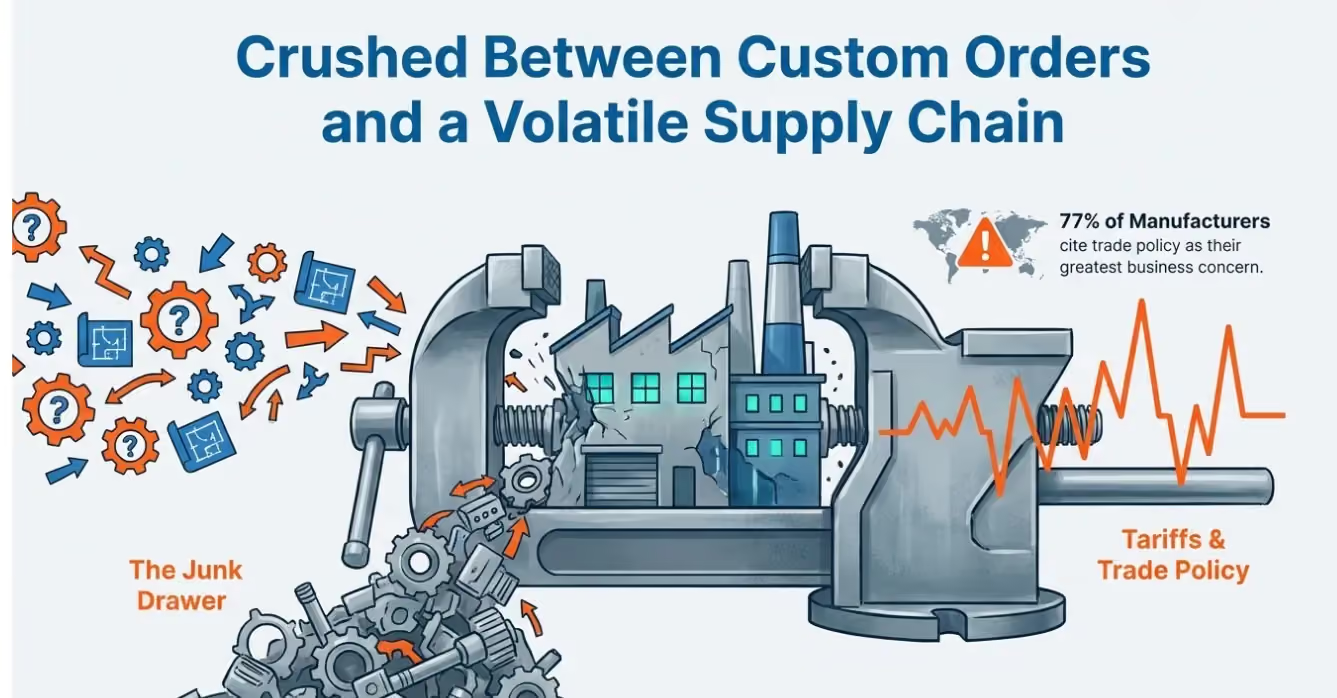
The Challenge: Unlike mass production, heavy machinery involves "Engineer-to-Order" agility. Customers demand bespoke configurations, which destroys standardized "Takt time" and leads to frequent, expensive line changeovers.
Why It Matters Now: Every time an engineer designs a "new" part instead of searching for an existing one, they add roughly $4,500 to $7,500 in annual inventory carrying costs and unnecessary tooling.
How CADDi Helps: CADDi’s similarity search allows engineers and managers to instantly find dimensionally similar parts from the past. By identifying existing designs that can be repurposed, the platform directly combats parts proliferation and reduces search time by 90%. This recovers hundreds of hours of high-skilled labor that can be reallocated to strategic tasks. Read our blog on how to tackle the “junk drawer” of parts proliferation.
5. Navigating Geopolitical Whiplash and Sourcing Agility
The Challenge: The "Just-in-Time" philosophy has been replaced by "Just-in-Case" inventory due to trade uncertainty and tariffs. Managers are sitting on a mountain of high-cost inventory just as demand signals are beginning to weaken.
Why It Matters Now: Trade policy volatility is the single greatest business concern for 77% of manufacturers. You need to be able to pivot to alternative suppliers or domestic sourcing without eating massive overhead costs.
How CADDi Helps: CADDi enables data-driven sourcing by linking drawings to historical cost data, supplier details, and lead times. Its similarity search allows you to quickly identify alternative suppliers for any given part or bundle similar parts together to create more attractive order packages for new domestic partners. This builds a procurement process that is knowledgeable, flexible, and agile enough to handle sudden tariff shifts. Get ahead of disruption by reading our blog on CADDi Quote’s power to tackle tariff nightmares.
Conclusion: Reclaiming "The Boring Day"
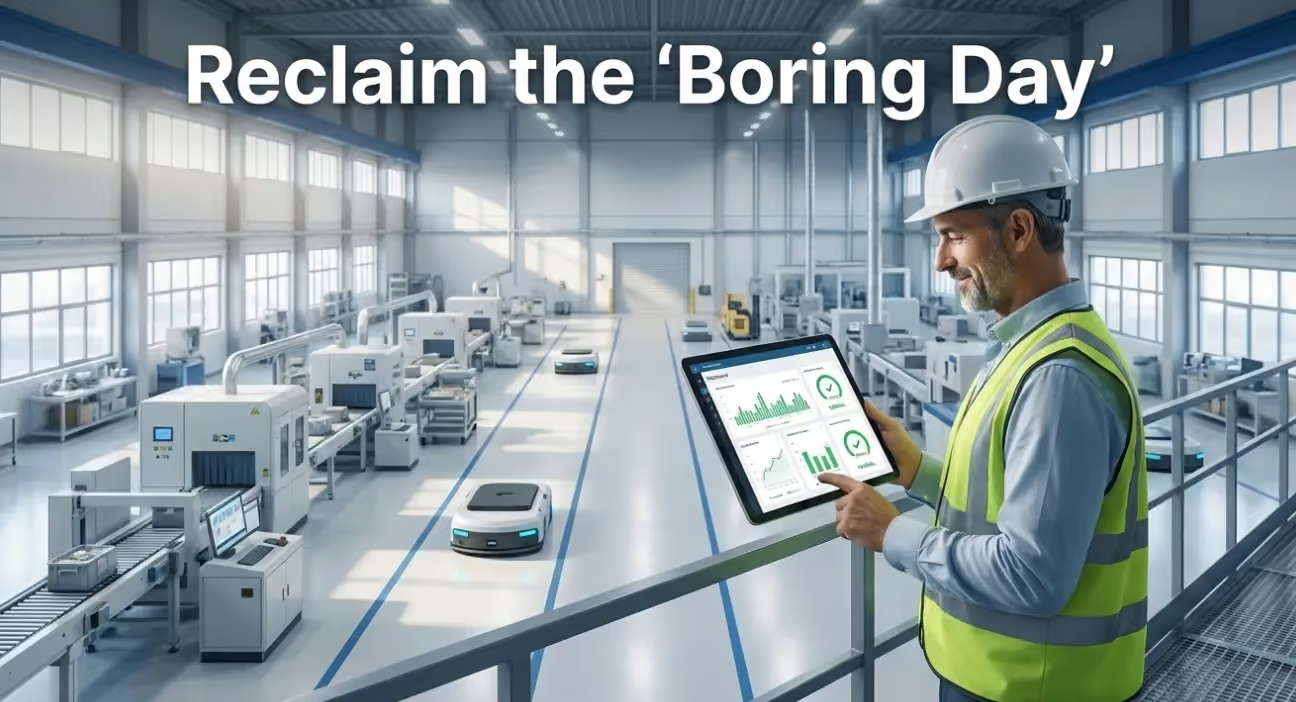
For a Plant Manager, the ultimate goal is stability—the "boring day" where processes run within control limits. Achieving this in a world of $50,000-per-minute downtime and "Silver Tsunamis" requires more than just grit; it requires Manufacturing Intelligence.
By turning your legacy drawings and supply chain data into actionable assets, you can bridge the skills gap, eliminate redundant work, and safeguard your margins against geopolitical volatility.
Ready to see how CADDi can bring visibility to your shop floor? Book a personalized demo today or explore our interactive experience.
The Mayor of a Small Industrial City: 5 Ways Plant Managers Can Restore Stability to Heavy Machinery Operations
Managing a heavy machinery plant in 2025 is often compared to being the "mayor of a small town". You aren’t just overseeing machines; you are responsible for the safety, livelihood, and social cohesion of a workforce that often runs 24/7. While the corporate office talks about "digital twins" and "Industry 4.0," your reality is defined by "firefighting"—responding to machine breakdowns, supplier shortages, and the "ghost crews" caused by high absenteeism.
The "Two-Thirds Rule" (pick two: fast, cheap, or good) has been discarded. Today, you are expected to deliver all three while navigating an economic paradox where output may be contracting even as capital investment in automation spikes. To move from a culture of reactive crisis management to proactive stability, you must transform your manufacturing data from a dormant archive into an actionable System of Insight.
Here are five critical challenges facing heavy machinery Plant Managers today and how CADDi’s AI data platform addresses them.
1. Capturing Tribal Knowledge Before the "Silver Tsunami" Hits
The Challenge: The heavy machinery sector is facing a demographic cliff. By 2033, the U.S. manufacturing sector faces a projected shortfall of 1.9 million workers. This isn't just a headcount issue; it's a catastrophic loss of "tribal knowledge"—the unwritten "feel" for how a 30-year-old press runs or the undocumented workarounds for legacy systems.
Why It Matters Now: Up to 79% of machine builders report that the skills shortage is significantly impacting operations. When a veteran maintenance tech or engineer retires, the "source code" of the plant’s operations often leaves with them, causing reliability to plummet.
How CADDi Helps: CADDi acts as an AI-driven "digital mentor". By digitizing and centralizing decades of fragmented IP—including handwritten notes and legacy 2D drawings—it creates a unified institutional repository. This allows new hires to access past projects and understand design intent instantly, reducing the time for new employees to become productive by 84%. Learn more about this in our report: The Labor Paradox: Navigating Manufacturing's Unsettling Reality.
2. Eliminating the $50,000-per-Minute Cost of Unplanned Downtime
The Challenge: Unplanned downtime is the nemesis of the Plant Manager. In heavy industry, these costs can spiral to $50,000 per minute ($3 million per hour) when critical bottlenecks occur.
Why It Matters Now: The "fix" for downtime is increasingly delayed by supply chain whiplash; a replacement hydraulic pump that used to take days can now take six weeks. You cannot afford to wait for a failure to happen.
How CADDi Helps: CADDi transforms quality control from a reactive to a predictive system. By linking quality defect reports directly to design drawings and part history, your team can identify patterns of failure. If a component fails, similarity search can instantly find every other drawing in the system with similar geometric features or materials, allowing for surgical containment actions before a wider production halt occurs. Read more in our blog on going from reactive to proactive.
3. Bridging the IT/OT Divide and Escaping "Excel Hell"
The Challenge: There is a profound cultural and technical collision between IT departments (focused on security/patching) and OT teams (focused on uptime). Because monolithic enterprise systems are often too rigid for the shop floor, managers retreat to "Shadow IT"—macro-laden Excel spreadsheets that run the plant but have no version control or backups.
Why It Matters Now: Relying on a "magic spreadsheet" created by an engineer who retired five years ago is a massive operational risk. If that file breaks or disappears, the line stops.
How CADDi Helps: CADDi Drawer serves as an AI-driven data lake that integrates fragmented records from ERP, PLM, and CAD systems. It uses the design drawing as the central anchor point to link all disparate data. This creates a single source of truth that provides the flexibility practitioners need without the risks of siloed spreadsheets. Check out our blog on how to build a manufacturing system of insight.
4. Managing High-Mix/Low-Volume (HMLV) Complexity
The Challenge: Unlike mass production, heavy machinery involves "Engineer-to-Order" agility. Customers demand bespoke configurations, which destroys standardized "Takt time" and leads to frequent, expensive line changeovers.
Why It Matters Now: Every time an engineer designs a "new" part instead of searching for an existing one, they add roughly $4,500 to $7,500 in annual inventory carrying costs and unnecessary tooling.
How CADDi Helps: CADDi’s similarity search allows engineers and managers to instantly find dimensionally similar parts from the past. By identifying existing designs that can be repurposed, the platform directly combats parts proliferation and reduces search time by 90%. This recovers hundreds of hours of high-skilled labor that can be reallocated to strategic tasks. Read our blog on how to tackle the “junk drawer” of parts proliferation.
5. Navigating Geopolitical Whiplash and Sourcing Agility
The Challenge: The "Just-in-Time" philosophy has been replaced by "Just-in-Case" inventory due to trade uncertainty and tariffs. Managers are sitting on a mountain of high-cost inventory just as demand signals are beginning to weaken.
Why It Matters Now: Trade policy volatility is the single greatest business concern for 77% of manufacturers. You need to be able to pivot to alternative suppliers or domestic sourcing without eating massive overhead costs.
How CADDi Helps: CADDi enables data-driven sourcing by linking drawings to historical cost data, supplier details, and lead times. Its similarity search allows you to quickly identify alternative suppliers for any given part or bundle similar parts together to create more attractive order packages for new domestic partners. This builds a procurement process that is knowledgeable, flexible, and agile enough to handle sudden tariff shifts. Get ahead of disruption by reading our blog on CADDi Quote’s power to tackle tariff nightmares.
Conclusion: Reclaiming "The Boring Day"
For a Plant Manager, the ultimate goal is stability—the "boring day" where processes run within control limits. Achieving this in a world of $50,000-per-minute downtime and "Silver Tsunamis" requires more than just grit; it requires Manufacturing Intelligence.
By turning your legacy drawings and supply chain data into actionable assets, you can bridge the skills gap, eliminate redundant work, and safeguard your margins against geopolitical volatility.
Ready to see how CADDi can bring visibility to your shop floor? Book a personalized demo today or explore our interactive experience.
Ready to see CADDi Drawer in action? Get a personalized demo.
Subscribe to our Blog!
.svg)
.svg)
.svg)

Related Resources