.svg)

The Strategic Architect: 5 Ways Automotive Procurement Can Navigate the 2026 "Triple Threat"

Table of Contents

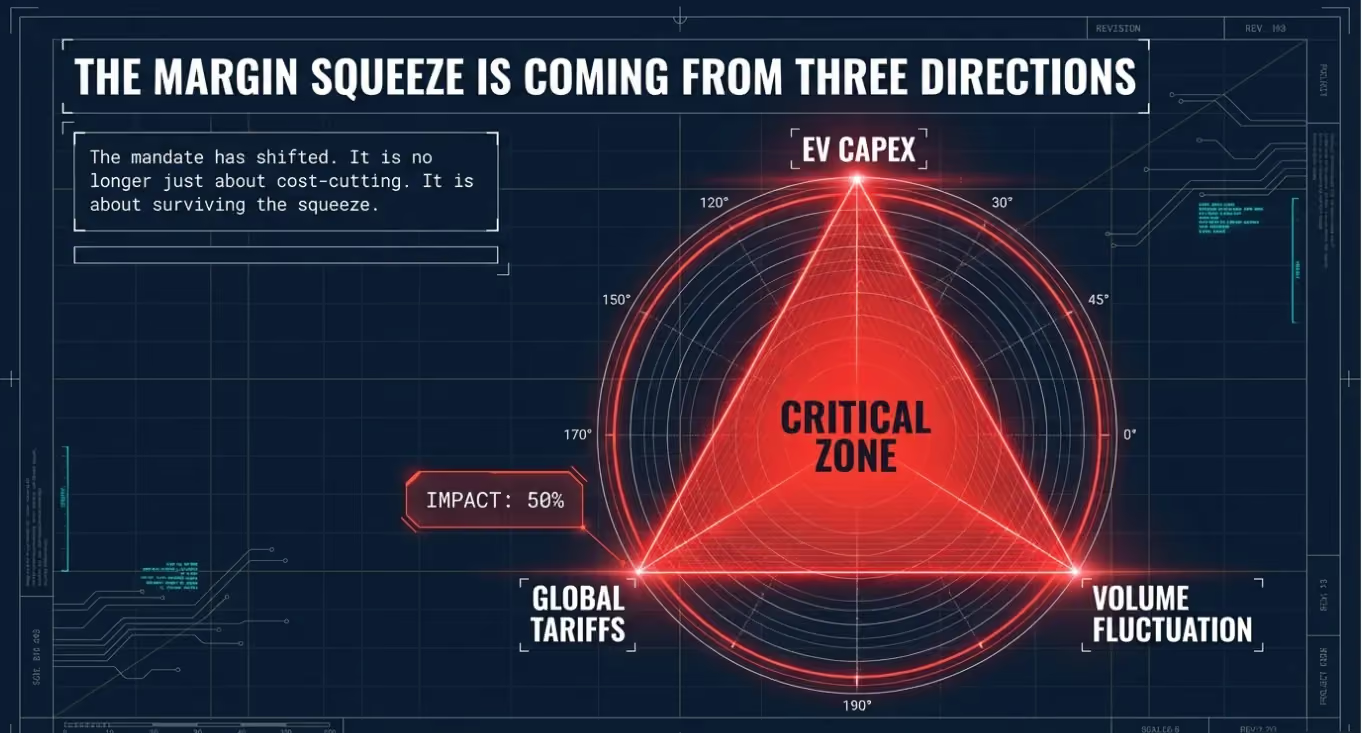
The American automotive procurement professional in 2026 operates at the fulcrum of a historical industry transformation. The traditional mandate of cost minimization has been superseded by a multidimensional imperative: managing a "Triple Threat to Margins" defined by the massive capital expenditure of the EV transition, fluctuating production volumes, and the relentless cost headwinds of new global tariffs.
In this environment, the "Buyer" is no longer just a transactional negotiator but a strategic architect of the supply chain. However, the ability to architect resilience is often hamstrung by a legacy of digital fragmentation—what we call "dark data"—where critical design history, supplier performance, and cost benchmarks remain trapped in paper archives or siloed spreadsheets.
To move from reactive "firefighting" to proactive ecosystem orchestration, procurement teams must adopt a System of Insight that transforms fragmented data into actionable intelligence.
Here are five critical challenges facing automotive procurement today and how CADDi helps solve them.
Achieving Cost-Down Mandates Amidst EV Margin Squeeze
The Challenge: Automotive OEMs and Tier-1 suppliers face aggressive cost-down mandates—often a 3% annual reduction—to keep programs viable. This is existential during the EV transition, as electric platforms typically generate lower margins per vehicle despite requiring higher initial capital investment.
Why It Matters Now: Procurement teams are being forced to absorb external cost shocks from raw materials and tariffs that can reach up to 50% on critical components like semiconductors and battery materials.
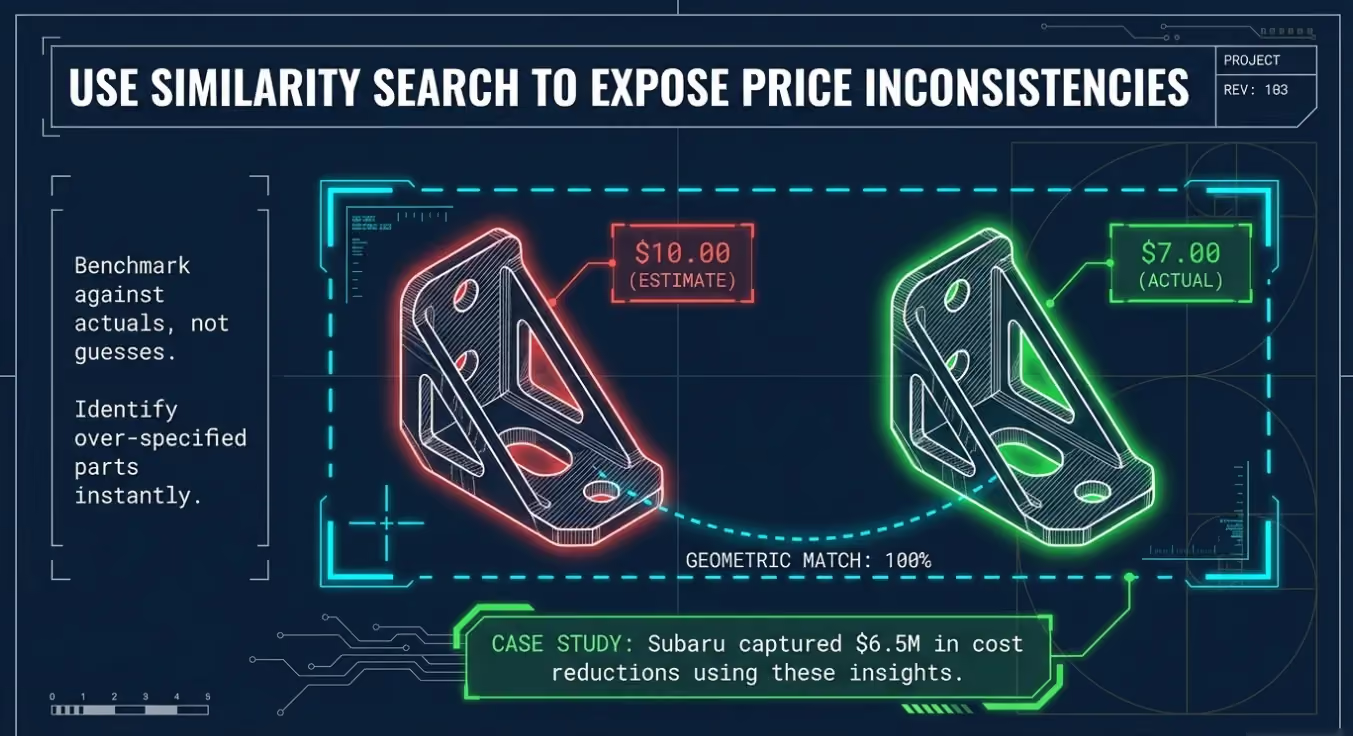
How CADDi Helps: CADDi Drawer utilizes patented similarity search to identify price inconsistencies across similar parts. By instantly surfacing every geometrically similar part ever sourced, procurement can establish an "actual" data-backed benchmark for what a component should cost. This empowers teams to execute rapid Value Analysis/Value Engineering (VA/VE) initiatives, identifying over-specified parts that drive unnecessary costs. Subaru, for instance, captured a $6.5 million direct cost reduction by leveraging these data-driven insights.
Executing the Reshoring/Nearshoring "Mexico Pivot"
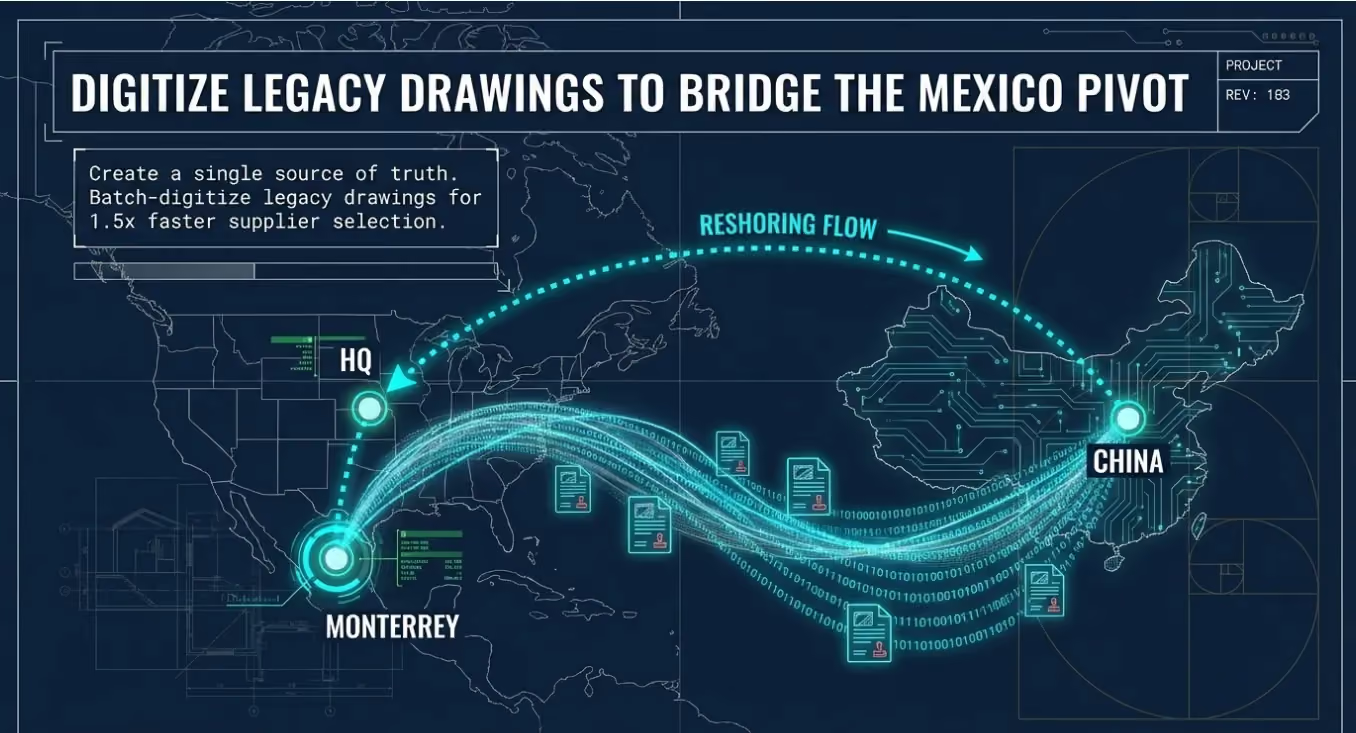
The Challenge: The decoupling from Chinese supply chains has made Mexico—specifically industrial hubs like Monterrey and Saltillo—the new center of gravity for automotive sourcing. Moving production, however, requires a massive transfer of technical data packages (drawings, specs, and quality history).
Why It Matters Now: 82% of manufacturers are actively reshoring or nearshoring, yet most struggle with the "Digital Divide". If technical data is trapped in unsearchable PDFs or paper files in the U.S., Mexican production teams lack a "single source of truth," leading to revision errors and launch delays.
How CADDi Helps: CADDi serves as a critical bridge for reshoring by batch-digitizing legacy 2D drawings and handwritten notes into searchable assets. Its platform enables 1.5x faster supplier selection by allowing procurement to quickly understand their own manufacturing needs and identify domestic or nearshore partners with the specific certified capacity to handle complex components.
Bridging the "Silver Tsunami" Knowledge Gap
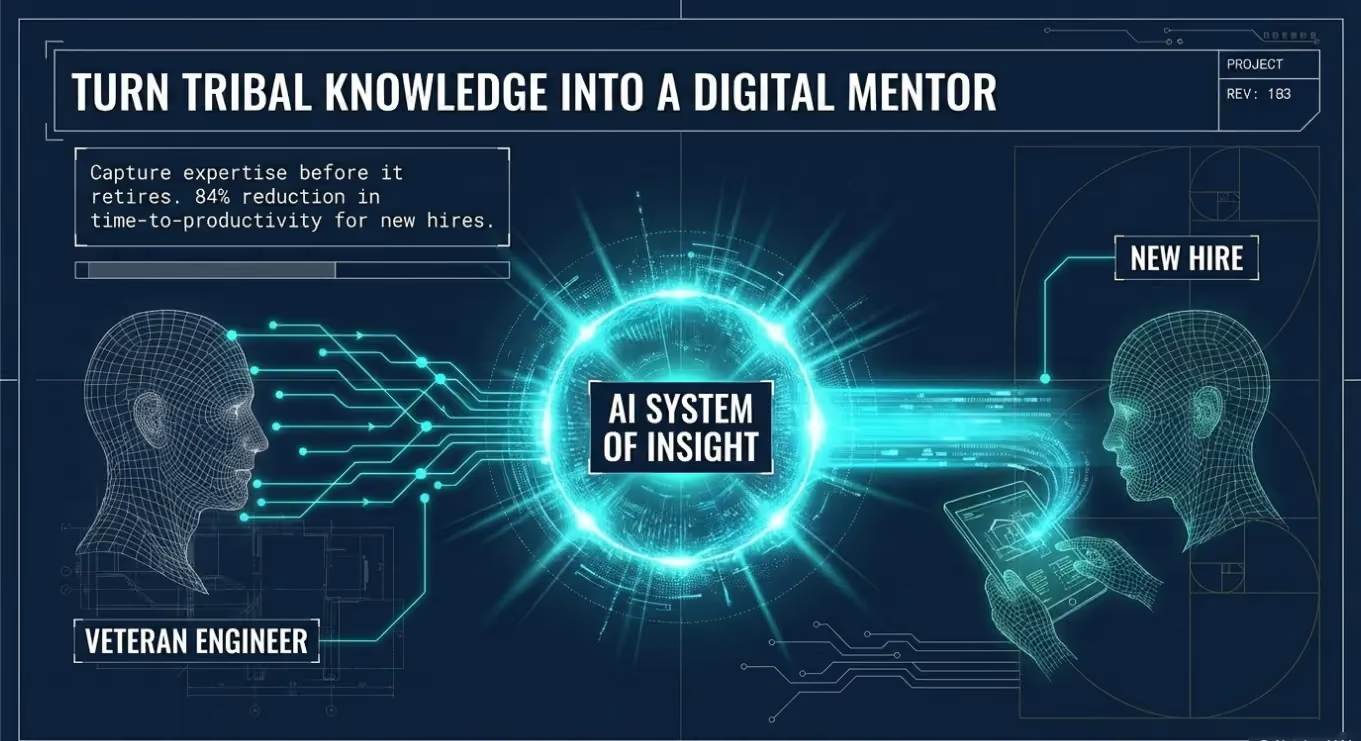
The Challenge: The automotive sector faces a structural human capital crisis, with a projected shortfall of 3.8 million workers by 2033. As veteran engineers and buyers retire, they take decades of "tribal knowledge"—undocumented insights into supplier reliability and design intent—with them.
Why It Matters Now: 72% of manufacturers report that outdated technology actively prevents them from attracting digitally native Gen Z talent. New hires often face a "redundancy tax," where they recreate parts because they cannot find existing ones in disorganized systems.
How CADDi Helps: CADDi acts as an AI-driven "digital mentor". By centralizing decades of intellectual property and making it searchable by shape or keyword (e.g., searching for "bumper" without needing a part number), CADDi has achieved an 84% reduction in the time required for new team members to become productive. Learn more in our blog: The Labor Paradox: Navigating Manufacturing's Unsettling Reality.
Overcoming the "Excel Hell" Data Silo Problem
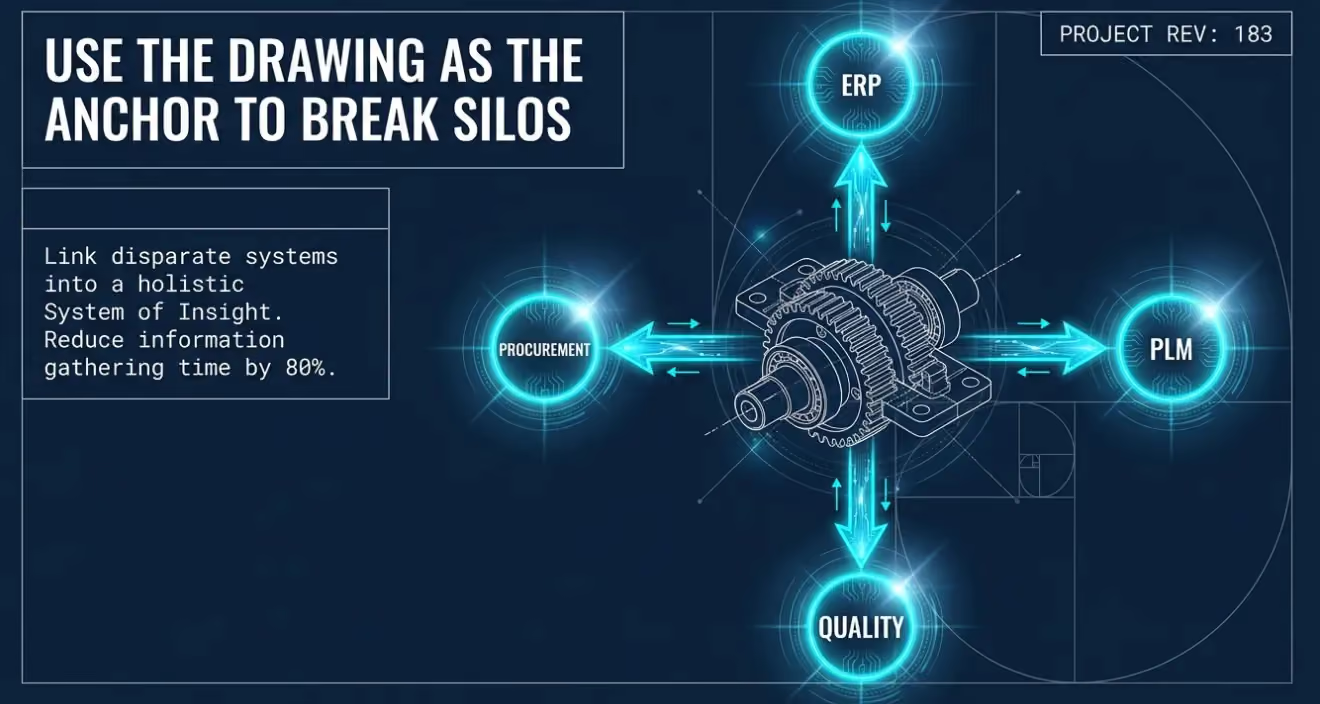
The Challenge: Despite multi-million dollar ERP and PLM systems, the functional nervous system of the automotive plant remains Microsoft Excel. Design data, purchasing records, and quality reports are siloed, preventing the holistic view needed for rapid strategic decisions.
Why It Matters Now: In a volatile landscape, "swivel-chair integration"—manually typing BOM data from CAD to Excel to ERP—is too slow and prone to error. Fragmented data inhibits accurate Total Cost of Ownership (TCO) modeling, which must now account for compliance risks and logistical friction.
How CADDi Helps: CADDi Drawer functions as an AI-driven data lake, using the drawing as the central anchor to link ERP, PLM, and quality systems. This creates a single source of truth that provides the agility needed for rapid scenario modeling and reduces procurement information-gathering time by over 60-80%. For more, see: Manufacturing Systems of Insight: Transforming Data into Value.
Managing Tariff Compliance and HTS Accuracy
The Challenge: Unpredictable trade policies, including USMCA rules of origin and new 25-50% duties, require procurement to have granular visibility into the material breakdown of every component.
Why It Matters Now: Misclassification of Harmonized Tariff Schedule (HTS) codes carries severe financial risks and penalties. Manufacturers must prove "reasonable care" in their sourcing data or face shipment detentions.
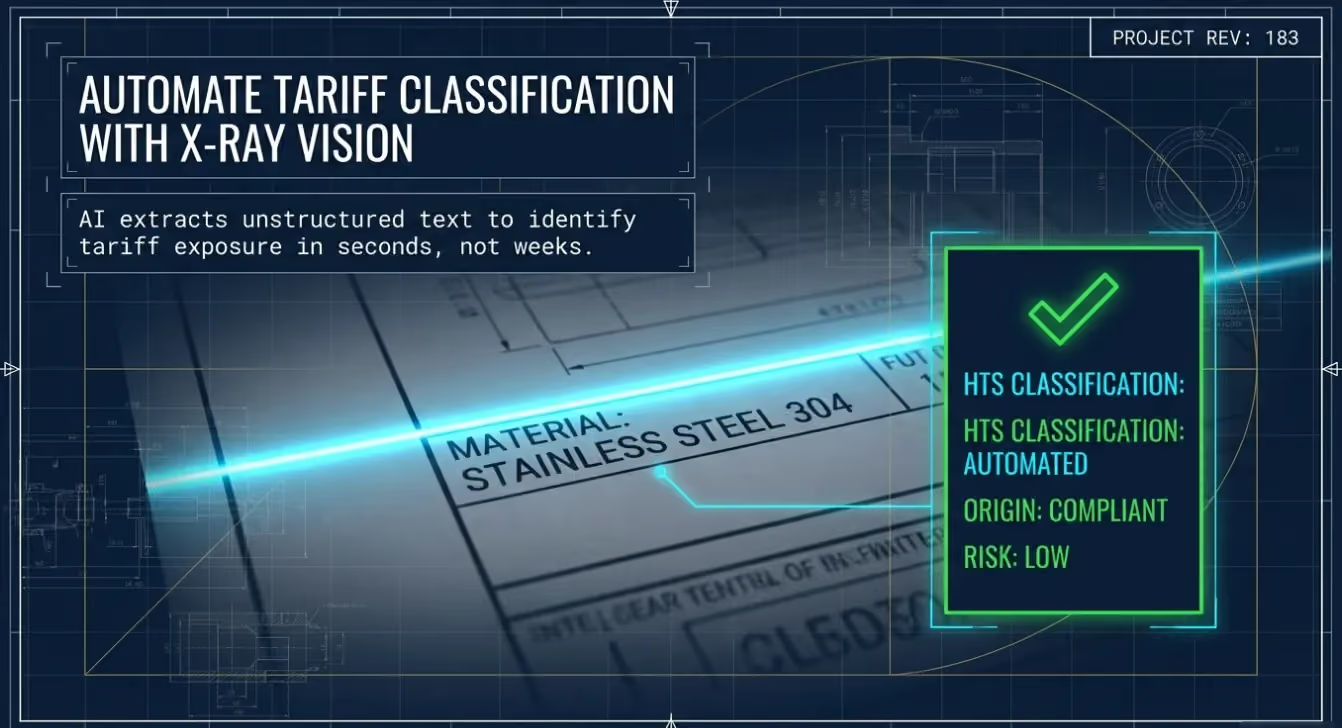
How CADDi Helps: CADDi’s proprietary OCR-based AI extracts unstructured data from technical drawings—including material specs, coatings, and tolerances—to automate HTS classification and track component origins. This allows teams to identify tariff exposure across thousands of parts in seconds, rather than weeks, providing a mechanism for rapid adaptation when policy shifts. Consult our detailed guide: Procurement 101: Total Cost of Ownership (TCO) – How to Leverage and Improve it.
Conclusion: From Reactive to Resilient
The future of automotive procurement is no longer about surviving "firefighting" cycles; it is about building an antifragile operation. By transforming legacy archives into a searchable System of Insight, procurement leaders can bridge the skills gap, neutralize geopolitical risk, and secure the margins necessary to lead the electrification era.
Ready to see how a drawing-centric AI platform can modernize your sourcing?
Book a personalized demo today or download our comprehensive guide: Reduce costs, not quality: Use VA/VE to uncover opportunities for efficiency.
The American automotive procurement professional in 2026 operates at the fulcrum of a historical industry transformation. The traditional mandate of cost minimization has been superseded by a multidimensional imperative: managing a "Triple Threat to Margins" defined by the massive capital expenditure of the EV transition, fluctuating production volumes, and the relentless cost headwinds of new global tariffs.
In this environment, the "Buyer" is no longer just a transactional negotiator but a strategic architect of the supply chain. However, the ability to architect resilience is often hamstrung by a legacy of digital fragmentation—what we call "dark data"—where critical design history, supplier performance, and cost benchmarks remain trapped in paper archives or siloed spreadsheets.
To move from reactive "firefighting" to proactive ecosystem orchestration, procurement teams must adopt a System of Insight that transforms fragmented data into actionable intelligence.
Here are five critical challenges facing automotive procurement today and how CADDi helps solve them.
Achieving Cost-Down Mandates Amidst EV Margin Squeeze
The Challenge: Automotive OEMs and Tier-1 suppliers face aggressive cost-down mandates—often a 3% annual reduction—to keep programs viable. This is existential during the EV transition, as electric platforms typically generate lower margins per vehicle despite requiring higher initial capital investment.
Why It Matters Now: Procurement teams are being forced to absorb external cost shocks from raw materials and tariffs that can reach up to 50% on critical components like semiconductors and battery materials.
How CADDi Helps: CADDi Drawer utilizes patented similarity search to identify price inconsistencies across similar parts. By instantly surfacing every geometrically similar part ever sourced, procurement can establish an "actual" data-backed benchmark for what a component should cost. This empowers teams to execute rapid Value Analysis/Value Engineering (VA/VE) initiatives, identifying over-specified parts that drive unnecessary costs. Subaru, for instance, captured a $6.5 million direct cost reduction by leveraging these data-driven insights.
Executing the Reshoring/Nearshoring "Mexico Pivot"
The Challenge: The decoupling from Chinese supply chains has made Mexico—specifically industrial hubs like Monterrey and Saltillo—the new center of gravity for automotive sourcing. Moving production, however, requires a massive transfer of technical data packages (drawings, specs, and quality history).
Why It Matters Now: 82% of manufacturers are actively reshoring or nearshoring, yet most struggle with the "Digital Divide". If technical data is trapped in unsearchable PDFs or paper files in the U.S., Mexican production teams lack a "single source of truth," leading to revision errors and launch delays.
How CADDi Helps: CADDi serves as a critical bridge for reshoring by batch-digitizing legacy 2D drawings and handwritten notes into searchable assets. Its platform enables 1.5x faster supplier selection by allowing procurement to quickly understand their own manufacturing needs and identify domestic or nearshore partners with the specific certified capacity to handle complex components.
Bridging the "Silver Tsunami" Knowledge Gap
The Challenge: The automotive sector faces a structural human capital crisis, with a projected shortfall of 3.8 million workers by 2033. As veteran engineers and buyers retire, they take decades of "tribal knowledge"—undocumented insights into supplier reliability and design intent—with them.
Why It Matters Now: 72% of manufacturers report that outdated technology actively prevents them from attracting digitally native Gen Z talent. New hires often face a "redundancy tax," where they recreate parts because they cannot find existing ones in disorganized systems.
How CADDi Helps: CADDi acts as an AI-driven "digital mentor". By centralizing decades of intellectual property and making it searchable by shape or keyword (e.g., searching for "bumper" without needing a part number), CADDi has achieved an 84% reduction in the time required for new team members to become productive. Learn more in our blog: The Labor Paradox: Navigating Manufacturing's Unsettling Reality.
Overcoming the "Excel Hell" Data Silo Problem
The Challenge: Despite multi-million dollar ERP and PLM systems, the functional nervous system of the automotive plant remains Microsoft Excel. Design data, purchasing records, and quality reports are siloed, preventing the holistic view needed for rapid strategic decisions.
Why It Matters Now: In a volatile landscape, "swivel-chair integration"—manually typing BOM data from CAD to Excel to ERP—is too slow and prone to error. Fragmented data inhibits accurate Total Cost of Ownership (TCO) modeling, which must now account for compliance risks and logistical friction.
How CADDi Helps: CADDi Drawer functions as an AI-driven data lake, using the drawing as the central anchor to link ERP, PLM, and quality systems. This creates a single source of truth that provides the agility needed for rapid scenario modeling and reduces procurement information-gathering time by over 60-80%. For more, see: Manufacturing Systems of Insight: Transforming Data into Value.
Managing Tariff Compliance and HTS Accuracy
The Challenge: Unpredictable trade policies, including USMCA rules of origin and new 25-50% duties, require procurement to have granular visibility into the material breakdown of every component.
Why It Matters Now: Misclassification of Harmonized Tariff Schedule (HTS) codes carries severe financial risks and penalties. Manufacturers must prove "reasonable care" in their sourcing data or face shipment detentions.
How CADDi Helps: CADDi’s proprietary OCR-based AI extracts unstructured data from technical drawings—including material specs, coatings, and tolerances—to automate HTS classification and track component origins. This allows teams to identify tariff exposure across thousands of parts in seconds, rather than weeks, providing a mechanism for rapid adaptation when policy shifts. Consult our detailed guide: Procurement 101: Total Cost of Ownership (TCO) – How to Leverage and Improve it.
Conclusion: From Reactive to Resilient
The future of automotive procurement is no longer about surviving "firefighting" cycles; it is about building an antifragile operation. By transforming legacy archives into a searchable System of Insight, procurement leaders can bridge the skills gap, neutralize geopolitical risk, and secure the margins necessary to lead the electrification era.
Ready to see how a drawing-centric AI platform can modernize your sourcing?
Book a personalized demo today or download our comprehensive guide: Reduce costs, not quality: Use VA/VE to uncover opportunities for efficiency.
Ready to see CADDi Drawer in action? Get a personalized demo.
Subscribe to our Blog!
.svg)
.svg)
.svg)